Showing posts with label language poets. Show all posts

Sunday, February 27, 2022

Kathleen Fraser


"This Language We Come Up Against"

Hartley "Textual Politics" - On Stein: "She does not write in order to
enclose (define, delimit, decipher) the world but to move within it;
in other words, she does not function according to the static
determinism of the noun but through the process of relationship." 
Juxtaposition important; meaning in relation.  Political lang poets: 
     
McGann, "Contemp Poetry, Alt Routes" - Lang poets repudiate linear
and/or chornological narrative, and use instead anti-narrative and
non-narrative.  Lang writing is actually constructive in its
demolition of the conventional relation between the active
(dictatorial) writer and the passive (victimized reader)--against the
"I know, you don't," "I have, you want," "I give, you take" writer-
reader relationship.  Thinks of political life and learning
(government-citizen and teacher-student relations) in the same way. 
Lang writing attempts to draw reader into production process by
leaving connections between various elements open, thus allowing
reader to help produce those connections.

Bernstein, "Whose Language" (P) - ..by leaving connections between
various elements open, thus allowing reader to help produce those
connections.  John Cage: "Studying being interrupted."

Bernstein's "Dysraphism" (B) - "I felt the abridgement of
imperatives....Morose or comotose."  (Jackson Mac Low: healthy for
meaning to think of words as sounds: "But can I specify anything
beyond sounds? Words gives "'the sensation of meaning,'" but can I
connect the meanings of the words as readily as I find their sounds
connected?"

Howe from My Emily (B) - Who polices questions of grammar? Commends
"breaking the law just short of breaking off communication."  Tom
Mandel's "Realism": "The text guards the door to the reading room."

Armantrout, "Lang of Love" (P) - If lang (e.g. sexual political lang)
is forever exfoliated and encoded, then "understanding" is itself one
of those words. Coming on to you, "The boss could say / 'parameters' /
and mean something / like 'I'll pinch.'"

Silliman, "Albany" (B) - linear chronological autobiographical
narrative is bullshit.
John Cage: "Constellations of ideas (five as a minimum)."  Narrative
essence = having a goal; but, per John Cage, "Goal is not to have a
goal." "This" is the one thing that will save America.  Make it new =
renew contract with America: "Sign here and the ink will fade in
conditions of its own choosing, an icon overcome by the conditions of
its control" (Tom Mandel, "Realism"). See the back of this page.

Kathleen Fraser, "re:searches" (P) - same attitude against
chronological autobiography as Silliman. "Not random, these /
crystalline structures, these / non-reversible orders...this language
we come up against."

Carla Harryman, "Realism" & Tom Mandel, "Realism" (P) - Pomo lang is
not only meaningful but is in fact a form of realism superior to what
we customarily call realism, a mimesis (imitation) not of the external
object but of the perceptual process itself.  John Cage:
"Art=imitation of nature in her manner of operation."


Susan Howe


My Emily Dickinson (excerpt)

In the college library I use there are two writers whose work refuses to conform to the Anglo-American literary traditions these institutions perpetuate. Emily Dickinson and Gertrude Stein are clearly among the most innovative precursors of modernist poetry and prose, yet to this day canonical criticism from Harold Bloom to Hugh Kenner persists in dropping their names and ignoring their work. Why these two pathfinders were women, why American--are questions too often lost in the penchant for biographical detail that "lovingly" muffles their voices. One, a recluse, worked without encouragement or any real interest from her family and her peers. Her poems were unpublished in her lifetime. The other, an influential patron of the arts, eagerly courted publicity, thrived on company, and lived to enjoy her own literary celebrity. Dickinson and Stein meet each other along paths of the Self that begin and end in contradiction. This surface scission is deceptive. Writing was the world of each woman. In a world of exaltation of his imagination, feminine inscription seems single and sudden.

As poetry changes itself it changes the poet's life. Subversion at- tracted the two of them. By 1860 it was as impossible for Emily Dickinson simply to translate English poetic tradition as it was for Walt Whitman. In prose and in poetry she explored the implications of breaking the law just short of breaking off communication with a reader. Starting from scratch, she exploded habits of standard human intercourse in her letters, as she cut across the customary chronological linearity of poetry. Gertrude Stein (1874-1946), influenced by Cezanne, Picasso and Cubism, verbally elaborated on visual invention. She reached in words for new vision formed from the process of naming, as if a first woman were sounding, not describing, "space of time filled with moving." Repetition, surprise, alliteration, odd rhyme and rhythm, dislocation, deconstruction. To restore the original clarity of each word-skeleton both women lifted the load of European literary custom. Adopting old strategies, they reviewed and re-invented them.

Emily Dickinson and Gertrude Stein also conducted a skillful and ironic investigation of patriarchal authority over literary history. Who polices questions of grammar, parts of speech, connection, and connotation? Whose order is shut inside the structure of a sentence? What inner articulation releases the coils and complications of Saying's assertion? In very different ways the countermovement of these two women's work penetrates to the indefinite limits of written communication.


Emily Dickinson took the scraps from the separate "higher" female education many bright women of her time were increasingly resenting, combined them with voracious and "unladylike" outside reading, and used the combination. She built a new poetic form from her fractured sense of being eternally on inteIlectual borders, where confident masculine voices buzzed an alluring and inaccessible discourse, backward through history into aboriginal anagogy. Pulling pieces of geometry, geology, alchemy, philosophy, politics, biography, biology, mythology, and philology from alien territory, a "sheltered" woman audaciously invented a new grammar grounded in humility and hesitation. HESITATE from the Latin, meaning to stick. Stammer. To hold back in doubt, have difficulty speaking. "He may pause but he must not hesitate"-Ruskin. Hesitation circled back and surrounded everyone in that confident age of aggressive industrial expansion and brutal Empire building. Hesitation and Separation. The Civil War had split American in two. He might pause, She hesitated. Sexual, racial, and geographical separation are at the heart of Definition.


Gertrude Stein


 from Stanzas in Meditation: Stanza 83

Why am I if I am uncertain reasons may inclose.   
Remain remain propose repose chose.   
I call carelessly that the door is open   
Which if they may refuse to open   
No one can rush to close.   
Let them be mine therefor.   
Everybody knows that I chose.   
Therefor if therefore before I close.   
I will therefore offer therefore I offer this.
Which if I refuse to miss may be miss is mine.
I will be well welcome when I come.   
Because I am coming.
Certainly I come having come.
                           These stanzas are done.

Gertrude Stein


Stanzas In Meditation: Stanza II

I think very well of Susan but I do not know her name 
I think very well of Ellen but which is not the same 
I think very well of Paul I tell him not to do so 
I think very well of Francis Charles but do I do so 
I think very well of Thomas but I do not not do so 
I think very well of not very well of William 
I think very well of any very well of him 
I think very well of him. 
It is remarkable how quickly they learn 
But if they learn and it is very remarkable how quickly they learn 
It makes not only but by and by 
And they may not only be not here 
But not there 
Which after all makes no difference 
After all this does not make any does not make any difference 
I add added it to it. 
I could rather be rather be here.

Friday, February 25, 2022

Nataniel Mackey

Hambone

Nathaniel Mackey
Santa Cruz, California

Nos. 1–21 (Spring 1974, 1982–2015). 

HAMBONE’S LINEAGE INCLUDES the poetry of Black Mountain, the San Francisco Renaissance, language poetry, and the myths and traditions of West and North Africa, Haiti, and Papua/New Guinea, as well as the history and rhythms of blues, jazz, and improvisatory music. Editor Nathaniel Mackey was born in Miami and grew up in Southern California, before attending both Princeton and Stanford universities. While at Stanford in 1974, he was one of the editors of the first issue of Hambone, which was not to appear again until 1982 when, as a better-established poet and scholar, Mackey revived the periodical (he has since gone on to publish a half dozen books of poetry, an anthology of jazz poetry, and, in 1993, a highly regarded critical work, Discrepant Engagement: Dissonance, Cross-Culturality, and Experimental Writing).

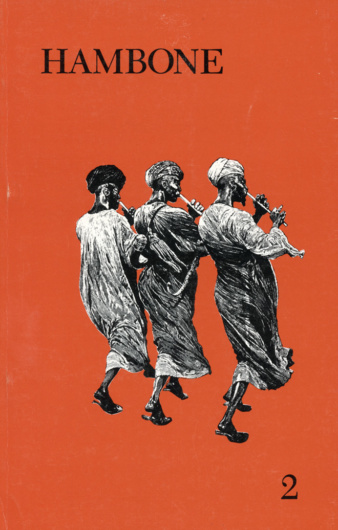
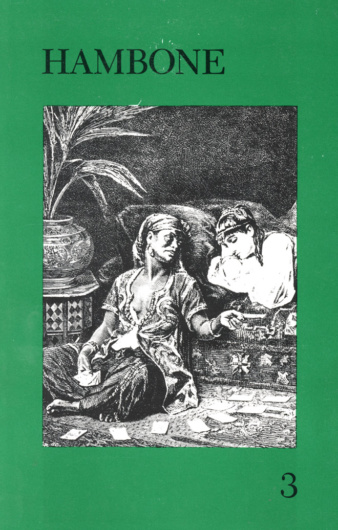
The revived Hambone reflects the wide interests of its editor in “cross-cultural” and experimental writing as well as writing by people of color (two of Mackey’s cultural heroes are Imamu Amiri Baraka and Guyanese novelist Wilson Harris). Mackey commented on his role as editor in an interview with Chris Funkhouser published in the print magazine Callaloo and at the Electronic Poetry Center from SUNY-Buffalo: “my idea was to simply put my sense of a community of writers and artists on a kind of map, in one place. So in Hambone 2, in which all of the material was solicited, that meant having a talk by Sun Ra and poems by Robert Duncan, poems by Beverly Dahlen, Jay Wright, fiction by Clarence Major, Wilson Harris, poems by Edward Kamau Brathwaite and so on. That issue was sort of saying, ‘OK, here’s my map, a significant part of it, and we’re going to call it Hambone.’ It seems to me that’s what little magazines do, and do best. They put out a particular editor’s sense of ‘what’s up’ out there—and you find out who ‘out there’ is interested in that.”

Hambone 2 (1982).

Hambone 2 (1982).

Hambone 3 (1983).

Hambone 3 (1983).


Nathaniel Mackey

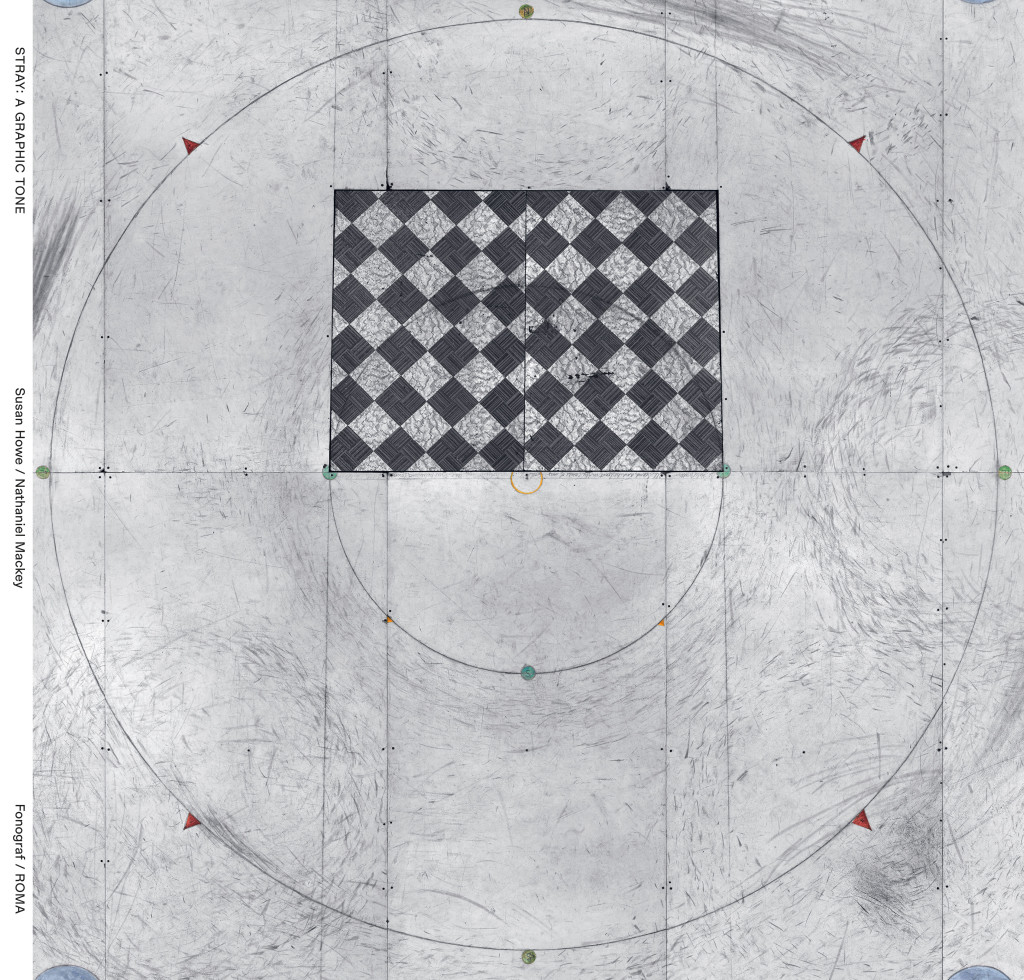
Stray, with Susan Howe


Song of the Andoumboulou: 55

—orphic fragment—

    Carnival morning they
 were Greeks in Brazil,
   Africans in Greek
disguise. Said of herself
                                     she
       was born in a house in
    heaven. He said he was
     born in the house next
 door... They were in hell.
   In Brazil they were
                                  lovebait.
      To abide by hearing was
         what love was... To
       love was to hear without
    looking. Sound was the
                                          beloved’s
     mummy cloth... All to say,
 said the exegete, love in
    hell was a voice, to be spoken
  to from behind, not be able
     to turn and look... It
   wasn’t Greece where they
                                           were,
 nor was it Benin... Carnival
morning in made-up hell, bodies
    bathed in loquat light, would-be
 song’s all the more would-be
     title, “Sound and Cerement,”
                                                    voice
      wound in bandages
   raveling
                lapse

                  .

    Up all night, slept well
past noon. Awoke restless
  having dreamt she awoke on
     Lone Coast, wondering
   afterwards what it came
                                         to,
     glimpsed interstice,
                                    crevice,
       crack... Saw her
  dead mother and brother
pull up in a car, her brother
   at the wheel not having driven
     while alive, newly taught
                                             by
   death it appeared. A fancy car,
                                                   bigger
  than any her mother had had while
     alive, she too better off it
appeared... A wishful read, “it
    appeared” notwithstanding, the
  exegete impossibly benign. Dreamt
                                                         a dream
      of dream’s end, anxious, unannounced,
   Eronel’s nevermore namesake, Monk’s
         anagrammatic Lenore... That the
       dead return in luxury cars made
                                                          us
        weep, pathetic its tin elegance,
                                                        pitiable,
          sweet read misread,
       would-be
     sweet

Tuesday, February 22, 2022

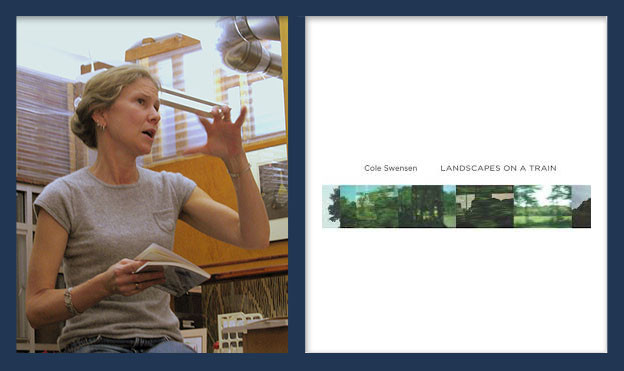
Cole Swensen

Cole Swensen


3 - Where does a poem usually begin for you? Are you an author of short pieces that end up combining into a larger project, or are you working on a "book" from the very beginning?


I tend to work on a book from the very beginning. In the last few things I’ve written, the book is the basic unit, so while my books are composed of discrete poems, they are conceived as larger units. 


Lately books have started for me through a nagging interest that I want to explore, and often that exploration amounts to lots of reading and light research, and often it has something to do with the visual arts—the visual arts linked with history. It’s a way, perhaps, of insisting upon poetry as language-as-art rather than language-as-information. I feel like I learned a lot the Language poets when I was in my early 20s, and particularly about the material potential of language on the one hand and the dangers (political and social) of the illusion of transparent and/or objective language on the other. That attention to surface has mixed in me with a love of the visual arts and has generated some of my works, though at times I regret poetry’s inability to achieve the same immediacy. 


 That regret is in part behind my interest in ekphrastic poetry, in reworking that genre so that it’s not so much a matter of standing across from a painting and attempting to replicate or translate its emotional impact, but of finding new ways to live with and in art, to make it increasingly present by having it infuse such a daily staple as language. 


I often begin with a specific work of art and a related idea. My most recent bookThe Glass Age, comes out of Pierre Bonnard’s paintings of windows and their paradoxical opacity (he used such vivid, dense, opaque colors), mixed with the idea that our age, beginning with the technological and scientific revolutions of the 19th century, is an increasingly fragile one, from the psychological brittleness caused by the loss of God to our potential to literally destroy the world.
The book I’d written before that, The Book of a Hundred Hands, began with a drawing manual by that name, and tries to see how much of a sheer concept the hand can become. And the last manuscript I finished, Ours, which is coming out in 2008, began in the 17th century formal French gardens of André Le Nôtre and addresses the idea of public versus private property.

Cole Swensen


Monday, February 21, 2022

Cole Swensen


André-Marie Ampère 1775–1836

electrically rowed Rousseau from a wide green meadow
                                                                                        into his brain
along with Buffon and Diderot
                                                 and the entire Enlightenment embroidered
in fractions, thus confusing
                                              poetry and mathematics. He stood back
and declared:
                        An umbrella could envelope
                                                                      a good part
of the village of Poleymieux en route to reviving the library
                                                                                             and why
did my wife die so young?
                                          Wrote out the psalms on his palm in the
electrodynamic molecules of his time
                                                           which he carried next to his heart
in a heart-shaped box
                                     obsessed
                                                   by Ørsted’s magnetized needle, leaping
full-grown and fully armed
                                           into the periodic table. Noble metals
isolated and at war
                               put each order in order
                                                                      and was the first to define
electric current as a circulation
                                                gazing out over the Mediterranean until it dies.


Sunday, February 20, 2022

Cole Swenson


Cole Swensen


Burnish

This is now uncommon. And therefore brittle sheers: 
To burnish is to 
raise the carapace, the doorknob, the letterbox, the concierge who 
gleaming in the sun, turns to sear. This gilded bone. A “we repeat it.” 
Did not reflect our faces. Or those of any we knew. This is a nameplate. Affixed 
to a doorway. No, to a door. Answer: there’s no one there. This is decor; a thin layer of gold that shines in tune. A leaf on which is added one to
one and one. 
It’s a name “scratched” “thereon” 
if I raise a finger 
and say I’m not at home, please; I may for once


Friday, February 18, 2022

Rachel Blau DuPlessis


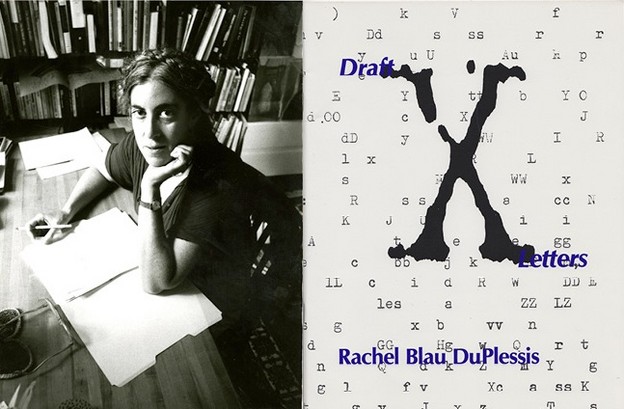
At left: Rachel Blau DuPlessis in 1985.


Poetics


So what about my own praxis? Drafts is a long poem, in autonomous canto like sections, with a projected total of 114 separate but related works; it was begun in 1986. Now it is 2010, and I have eight more poems to write. The poem’s activities are ongoing, and it has kept going so long as it is interesting to me. There is no narrative, no plot outline, and in terms of seriality (building a forensic argument inferentially, by leaps and movement)—the poem works only in the most general way. It is not about a personal story, or an expressivist narrative of realizations. It’s a series of explorations into the world and into it. The scale change from the little dot of “I” to the magnitude of “it” is what interests me. Sheer amazement and political mourning are two of the most salient aspects of the work.

Now imagine a rectangle divided into units, 19 units on one side, 6 on the other. The grid of 114 spaces offers a map of the written and the few still unwritten poems of Drafts. Imagine specific threads linking the sections, going in all possible directions, both spatially and even temporally—this is a field of practice much looser and less numerological. These threads are thematic recurrences, the line and phrase repetition, the echoes and recalling of words and cadences across the sculptural and spatial distances of Drafts. Between Draft 19 and Draft 20, quite early in the project, it occurred to me that I did not have to go endlessly one to one to one, but could “begin again”—certainly a Steinian move. That is, in its early phase (1986-1993), Drafts seemed to declare a palette of themes and allusions. To build a working matrix for these poems, I decided both to repeat some version of these themes and materials in the same general order every nineteen poems, folding one group over another, making them, in H.D.’s terms “the same—different—the same attributes,/ different, yet the same as before”— (Trilogy II, sec. 39). By beginning again, I could construct a fold or crease or pleat so the particular poems that touch are related. The deep feelings of the fold, the sense of random diagonal links and repetition establishes the possibility that all parts of the work are involved with all other parts, each touches on all. There is a topology of mutuality, even mutual pleasure and relatedness. 

That is how the fold, as well as the grid, became a structural and aesthetic principle of repetition constructing relationships among the works. Looking down the grid, the poems make a simple list or series; looking across the grid, one sees pleats of similarities across “lines.” For example, all the poems in the nineteenth position concern work, and have indicative titles: “Working Conditions,” “Georgics and Shadow,” “Workplace: Nekuia,” “Work-Table with Scale Models,” and “Erg.” Each considers what poetic work is, how it gets done, what its tasks and functions are. The poems on the third “line” often talk of “of-ness” —what we are “of,” community, connectedness (and its failures and losses), the world of things and the unevenness of distribution, political failures and hopes. There are many patterns of repetition, variation, extension, and reconsideration that make up the intense, sometimes sublime, sometimes lyric, sometimes suspicious texture of the work, with its evocative situations—personal, political, existential. 

I have “an edgy attraction to history’s material residues”—this said by Walter Benjamin in his essay “Edward Fuchs: The Collector as Historian.” I value the long poem, because its scope, its scale, its flexibility, and its ability to use a variety of genres all open the way to poetic/ poethical and cultural commentary. (The word “poethical” is a suggestive and helpful term from Joan Retallack.) Book-length works and trans-book works, life-poems or endless poems tend to create the power of their own worlds by sheer extent, generating a considerable space for working out assumptions about social and cultural values. Accumulation, pensive commentary, ethical commitments, decided poetic attentiveness, textual exactness and social pilgrimage are some of the advantages of Drafts for their author.

My use of Drafts as an overarching title for this project suggests that all the poems, as well as the whole structure, are only drafts of something beyond themselves, something that is palpable but unattainable. The work is compelled by the illusion that the individual poems aspire to one mysterious and unreachable poem, or some multiplex structure in another dimension, that all the individual poems are versions of something that can never really be completed, never fully be found, never totally be articulated. This feeling of the unknowable and the unreachable is very satisfying to me, for it expresses the messianic deferral characterizing the intellectual and ethical conditions of my calling as a poet.

Sheila Murphy


Chance F/light 

Rest precares for toffee as
The slain defense portrays
Faint guardian precept
Tainting crew light

Serenity become preclusive
In the swollen fire
Taste widened a part of see-
Through clasp to frame

In part the terrace
And the bluff, the craven
Cache of lathe in scribbled
Winter on a far park

Twisted white and gemmed
As pure as soffit
If the color jaune
Turns simpler than the clouded sea


Refrain 

Revoice the carriage as sure
Lack of aspirant’s repair
Streamline cauterized young piano
Tones plucked over raven stripes

Into the luster grasped to
Emirate divorce as faint
Daybreak wearing attitude divines
A toy broom corded fast

The latecome anchor swells
The wheat’s lone
Prowess as shy face
Afforded few bonanzas

Trace one finger where the hand
Traced on a page of paper
Becomes silver against the painted grape
As episodic float in space


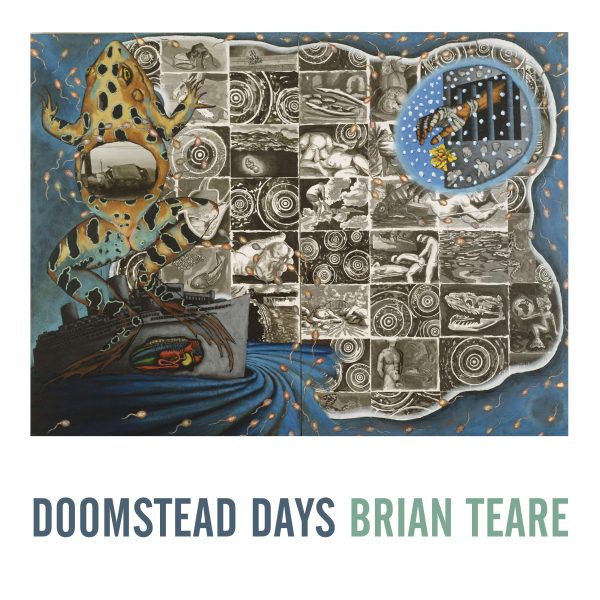
Brian Teare


white pencil on etching and acquaint proof, twelve and a quarter by twelve and a quarter inches 

                                                                                            —after a drawing by Agnes Martin

||          the grid’s a little calendar  I  put each minute into         || 
||                                                                                                          ||
||          an elongated box         grey with an e       the color         ||     
||                                                                                                          ||
||          of the thinking preceding       a divisive brighness         ||
||                                                                                                          ||
||          the time before migraine          or the thin needles          ||
||                                                                                                          ||
||          the healer sinks in my head        to release its heat         ||
||                                                                                                          ||
||          let’s put this minute  between    the need to vomit         ||
||                                                                                                          ||
||          and the history of metaphysics           my hot mind        ||
||                                                                                                          ||
||          cleared of its luminous fogs          I polish each line       ||
||                                                                                                          ||
||          of white pencil and think           being ill makes me       ||
||                                                                                                          ||
||          an object full of a process         hard to see at work        ||
||                                                                                                          ||
||          inside my body       the lyric might be a plastic art         ||
||                                                                                                          ||
||          after all     if my voice also takes place as a shape          ||
||                                                                                                          ||
||          arranged to stop the pain        when I pin the grid         ||
||                                                                                                          ||
||          with acupuncture needles      the page clicks shut          ||


We cannot understand everything that happens to everyone.
                                               —Agnes Martin

                                                     days of headache                        my mind a loose
                                                     flushed hot skin                          weave stained by
                                                                                                            thoughts it’s lost
illness keeps
a little calendar
                                                     the look of water
                                                     color on cotton                            so few memories
                                                                                                            I return to these
                                                                                                            colors as evidence

I’m writing it
by natural light


Any mistake in the scale and it doesn’t work out. It’s pretty hard because it’s such a small picture.
                                                                                            —Agnes Martin

the problem with illness
is I think there might be                            too much heat          
a way to be ill that would                         in the spleen
free me from suffering                              general fatigue
the way correctly placed                           foggy vision
needles calm symptoms                            stomach spasms 
 
                 during headache’s iterations   in the old medical textbook
                 I begin to miss visual images  each pressure point turns
                 though lyric is a woven grid    metaphorical
                 hard stresses threading weft                             thought shelter
                 through the warp of stacked
                 lines the last stanza finished                              labor palace
                 I put my ear to its little box     
                                                                                                dwelling bone

                                                                                                 broken bowl


As grass that is hard to grasp cuts the hand itself. 
                                  —from The Dhammapada

for a long time                                    I lie on my back
                              in the visual field
I lie on my back                                   and think I can
 
loving questions                                     think my way

because I think                                        through pain
                         wind is a great comfort
I have no answers                                      as if I knew
 
I have no choice                                      no difference
 
I have to live life                                     between pain
                         the teacher Agnes says
as I know it to be                                     and thinking
 
led by my mind                                   looking always
 
formed by mind                                 for safe passage
                      religion is about this grass
that is also my body                              between them


Barbara Guest

  Santa Fe Trail I go separately The sweet knees of oxen have pressed a path for me ghosts with ingots have burned their bare hands it is th...