Showing posts with label irish. Show all posts

Wednesday, February 16, 2022

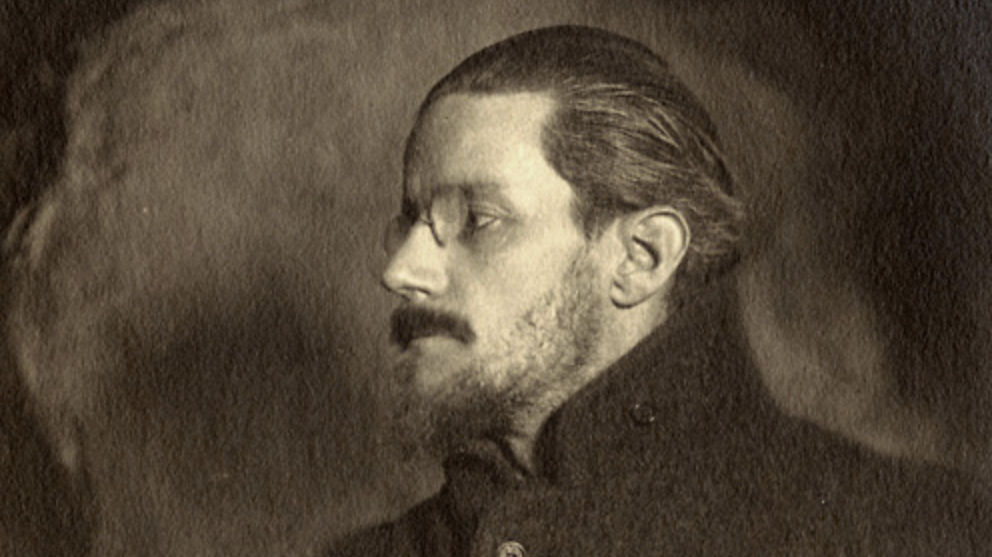
James Joyce


Avelaval: the last lines of Finnegans Wake in poetic form

So.

Avelaval.

My leaves have drifted from me.

All.

        But one clings still.

        I‘ll bear it on me.

        To remind me of.  Lff!

So soft this morning, ours. Yes.

Carry me along, taddy,

        like you done through the toy fair!

If I seen him bearing down on me now under whitespread wings

        like he‘d come from Arkangels,

I sink I‘d die down over his feet,

        humbly dumbly, only to washup.

Yes, tid. There‘s where. First.

We pass through grass behush the bush to. Whish!

A gull. Gulls.

        Far calls. Coming, far! End here.

        Us then. Finn, again!

Take. Bussoftlhee, mememormee!

        Till thous-

endsthee. Lps.

The keys to. Given!

        A way a lone a last a loved a long the


The Original:

So. Avelaval. My leaves have drifted from me. All. But one clings still. I‘ll bear it on me. To remind me of. Lff! So soft this morning, ours. Yes. Carry me along, taddy, like you done through the toy fair! If I seen him bearing down on me now under whitespread wings like he‘d come from Arkangels, I sink I‘d die down over his feet, humbly dumbly, only to washup. Yes, tid. There‘s where. First. We pass through grass behush the bush to. Whish! A gull. Gulls. Far calls. Coming, far! End here. Us then. Finn, again! Take. Bussoftlhee, mememormee! Till thous-endsthee. Lps. The keys to . Given ! A way a lone a last a loved a long the

.

Tuesday, February 15, 2022

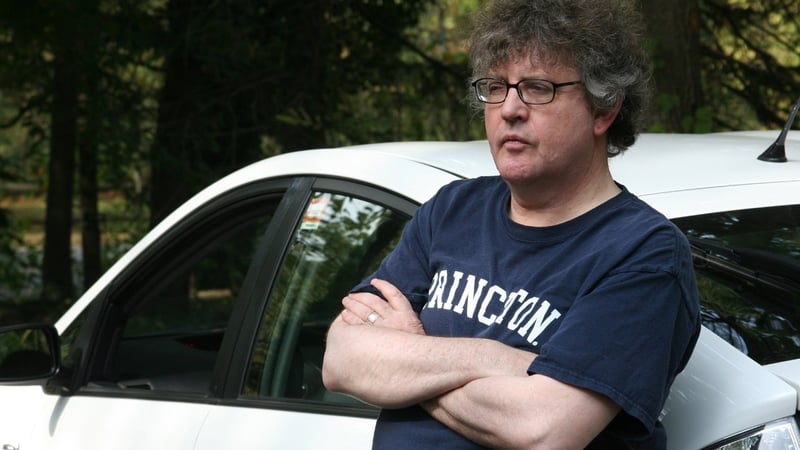
Paul Muldoon


Poet Paul Muldoon, the subject of this week's RTÉ Player recommendation. 


Monarch and Milkweed

As he knelt by the grave of his mother and father
the taste of dill, or tarragon-
he could barely tell one from the other-
filled his mouth. It seemed as if he might smother.
Why should he be stricken
with grief, not for his mother and father,
but a woman slinking from the fur of a sea-otter
In Portland, Maine, or, yes, Portland, Oregon-
he could barely tell one from the other-

and why should he now savour
the tang of her, her little pickled gherkin,
as he knelt by the grave of his mother and father?
He looked about. He remembered her palaver
on how both earth and sky would darken-
‘You could barely tell one from the other’-

while the Monarch butterflies passed over
in their milkweed-hunger: ‘A wing-beat, some reckon,
may trigger off the mother and father
of all storms, striking your Irish Cliffs of Moher
with the force of a hurricane.’
Then: ‘Milkweed and Monarch ‘invented’ each other.’

He looked about. Cow’s-parsley
in a samovar.
He’d mistaken his mother’s name, ‘Regan, ‘ for Anger’;
as he knelt by the grave of his mother and father
he could barely tell one from the other.


Paul Muldoon

. 068


 Cows 


Even as we speak, there’s a smoker’s cough 
from behind the whitethorn hedge: we stop dead in our tracks; 
a distant tingle of water into a trough.

In the past half-hour—since a cattle truck 
all but sent us shuffling off this mortal coil— 
we’ve consoled ourselves with the dregs

of a bottle of Redbreast. Had Hawthorne been a Gael, 
I insist, the scarlet A on Hester Prynne 
would have stood for “Alcohol.”

This must be the same truck whose taillights burn 
so dimly, as if caked with dirt, 
three or four hundred yards along the boreen

(a diminutive form of the Gaelic bóthar, “a road,” 
from bó, “a cow,” and thar 
meaning, in this case, something like “athwart,”

“boreen” has entered English “through the air” 
despite the protestations of the O.E.D.): 
why, though, should one taillight flash and flare

then flicker-fade 
to an afterimage of tourmaline 
set in a dark part-jet, part-jasper or -jade?

That smoker’s cough again: it triggers off from drumlin
to drumlin an emphysemantiphon 
of cows. They hoist themselves onto their trampoline

and steady themselves and straight away divine 
water in some far-flung spot 
to which they then gravely incline. This is no Devon

cow-coterie, by the way, whey-faced, with Spode 
hooves and horns: nor are they the metaphysicattle of Japan 
that have merely to anticipate

scoring a bull’s-eye and, lo, it happens; 
these are earth-flesh, earth-blood, salt of the earth, 
whose talismans are their own jawbones

buried under threshold and hearth. 
For though they trace themselves to the kith and kine 
that presided over the birth

of Christ (so carry their calves a full nine 
months and boast liquorice 
cachous on their tongues), they belong more to the line

that’s tramped these cwms and corries 
since Cuchulainn tramped Aoife. 
Again the flash. Again the fade. However I might allegorize

some oscaraboscarabinary bevy 
of cattle there’s no getting round this cattle truck, 
one light on the blink, laden with what? Microwaves? Hi-fis?

Oscaraboscarabinary: a twin, entwined, a tree, a Tuareg; 
a double dung-beetle; a plain 
and simple hi-firing party; an off-the-back-of-a-lorry drogue?

Enough of Colette and Céline, Céline and Paul Celan: 
enough of whether Nabokov 
taught at Wellesley or Wesleyan.

Now let us talk of slaughter and the slain, 
the helicopter gunship, the mighty Kalashnikov: 
let’s rest for a while in a place where a cow has lain.

------------------- 

Saturday, February 12, 2022

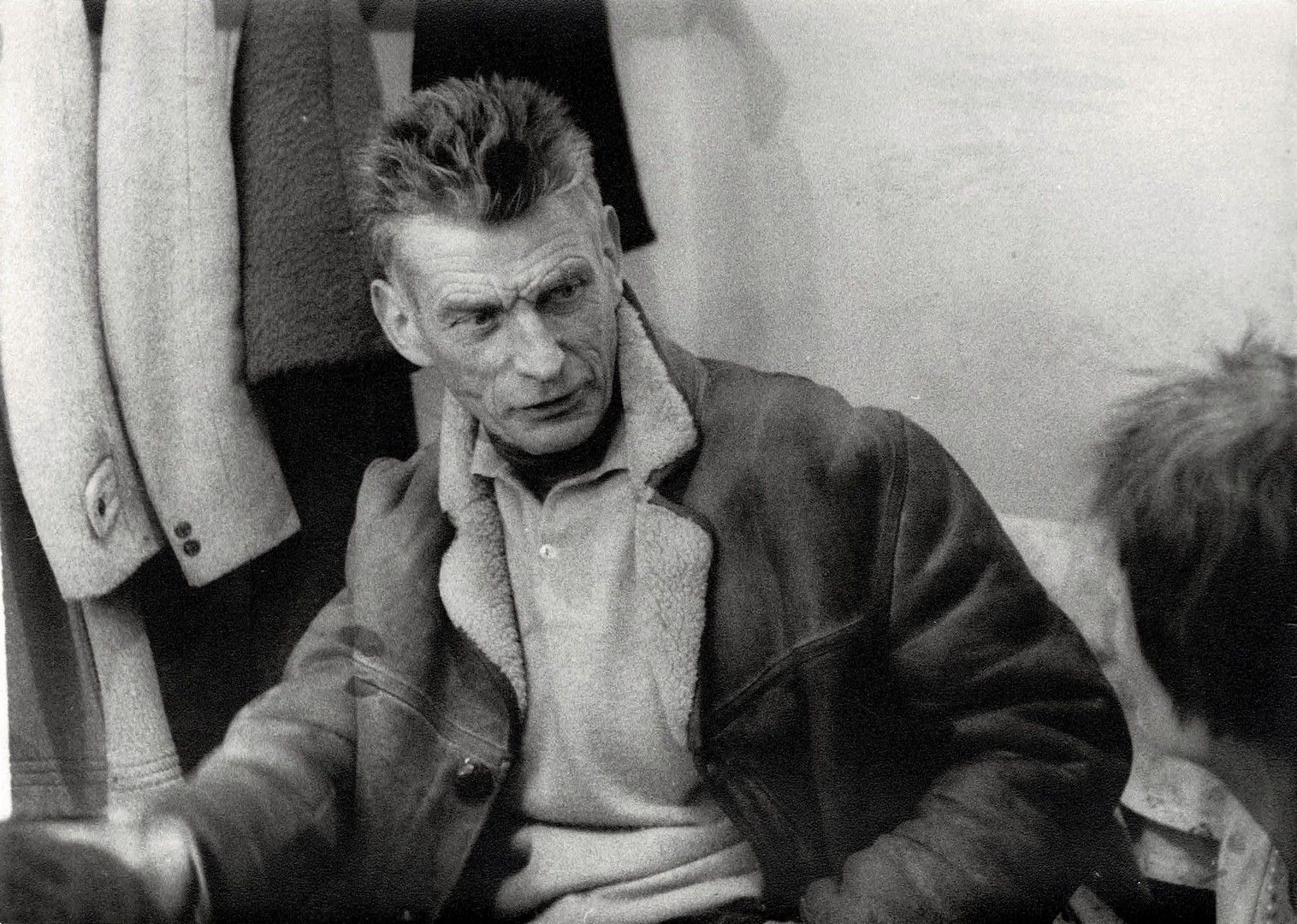
Samuel Backett

Samuel Beckett, by John Minihan - NPG x28996

    photograph by John Minihan, 1984


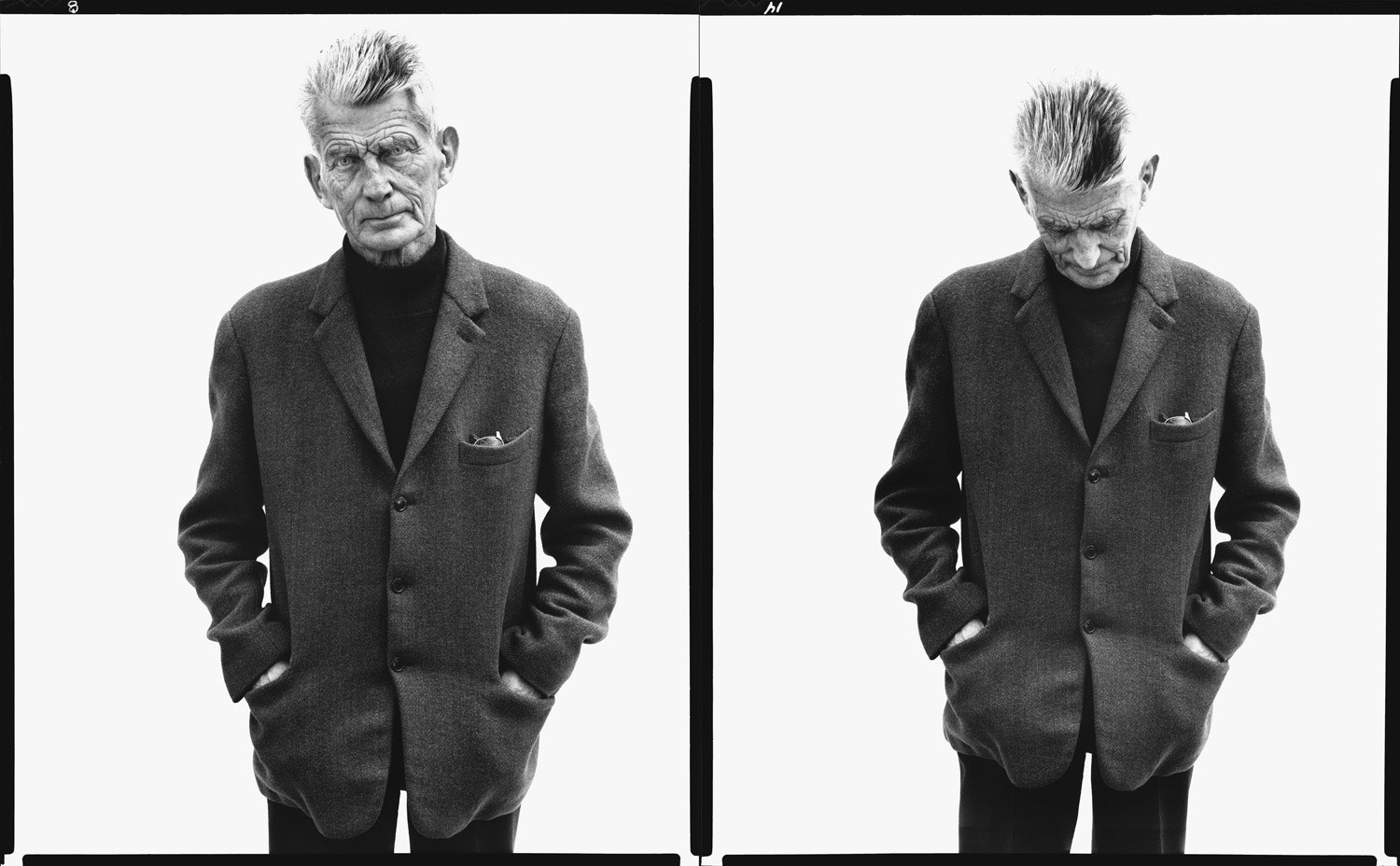
Samuel Beckett


Samuel Beckett Paris April 1979. Photograph by Richard Avedon. © The Richard Avedon Foundation.

photograph by Richard Avedon, April


Vladimir: What do they say?

Estragon: They talk about their lives.

Vladimir: To have lived is not enough for them.

Estragon: They have to talk about it."

― 'Waiting For Godot'.

Samuel Beckett

Artwork by Rosine Nusimovici, SAMUEL BECKETT, Portrait of the writer, Made of Silver print on period cartographic paper 


  bon bon il est un pays 

all right all right there's a land
where forgetting where forgetting weighs 
gently upon worlds unnamed
there the head we shush it the head is mute
and one knows no but one knows nothing
the song of dead mouths dies
on the shore it has made its voyage
there is nothing to mourn 

my loneliness I know it oh well I know it badly
I have the time is what I tell myself I have time
but what time famished bone the time of the dog
of a sky incessantly paling my grain of sky
of the climbing ray ocellate trembling
of microns of years of darkness 

you want me to go from A to B I cannot
I cannot come out I'm in a traceless land
yes yes it's a fine thing you've got there a mighty fine thing 
what is that ask me no more questions
 spiral dust of instants what is this the same
 the calm the love the hate the calm the calm


Samuel Beckett

 File:Samuel Beckett 1922.png


Dortmunder

Int  the magic the Homer dusk
past the red spire of sanctuary
I null she royal hulk
hasten to the violet lamp to the thin K'in music of the bawd.
She stands before me in the bright stall
sustaining the jade splinters
the scarred signaculum of purity quiet
the eyes the eyes black till the plagal east
shall resolve the long night phrase.
Then, as a scroll, folded,
and the glory of her dissolution enlarged
in me, Habbakuk, mard of all sinners.
Schopenhauer is dead, the bawd
puts her lute away.


William Butler Yeats

File:William Butler Yeats, Walter de la Mare by Lady Ottoline Morrell.jpg

        with Walter de la Mare, by Lady Ottoline Morrell


The Circus Animals’ Desertion

I

I sought a theme and sought for it in vain,
I sought it daily for six weeks or so.
Maybe at last being but a broken man
I must be satisfied with my heart, although
Winter and summer till old age began
My circus animals were all on show,
Those stilted boys, that burnished chariot,
Lion and woman and the Lord knows what.

II

What can I but enumerate old themes,
First that sea-rider Oisin led by the nose
Through three enchanted islands, allegorical dreams,
Vain gaiety, vain battle, vain repose,
Themes of the embittered heart, or so it seems,
That might adorn old songs or courtly shows;
But what cared I that set him on to ride,
I, starved for the bosom of his fairy bride.

And then a counter-truth filled out its play,
`The Countess Cathleen' was the name I gave it,
She, pity-crazed, had given her soul away
But masterful Heaven had intervened to save it.
I thought my dear must her own soul destroy
So did fanaticism and hate enslave it,
And this brought forth a dream and soon enough
This dream itself had all my thought and love.

And when the Fool and Blind Man stole the bread
Cuchulain fought the ungovernable sea;
Heart mysteries there, and yet when all is said
It was the dream itself enchanted me:
Character isolated by a deed
To engross the present and dominate memory.
Players and painted stage took all my love
And not those things that they were emblems of.

III

Those masterful images because complete
Grew in pure mind but out of what began?
A mound of refuse or the sweepings of a street,
Old kettles, old bottles, and a broken can,
Old iron, old bones, old rags, that raving slut
Who keeps the till. Now that my ladder's gone
I must lie down where all the ladders start
In the foul rag and bone shop of the heart.


Tuesday, January 18, 2022

Paul Muldoon


Lunch with Pancho Villa

I 

'Is it really a revolution, though?' 
I reached across the wicker table 
With another $10,000 question. 
My celebrated pamphleteer, 
Co-author of such volumes 
As Blood on the Rose, 
The Dream and the Drums, 
And How It Happened Here, 
Would pour some untroubled Muscatel 
And settle back in his cane chair. 

'Look, son. Just look around you. 
People are getting themselves killed 
Left, right and centre 
While you do what? Write rondeaux? 
There's more to living in this country 
Than stars and horses, pigs and trees, 
Not that you'd guess it from your poems. 
Do you never listen to the news? 
You want to get down to something true, 
Something a little nearer home.' 

I called again later that afternoon, 
A quiet suburban street. 
'You want to stand back a little 
When the world's at your feet.' 
I'd have liked to have heard some more 
Of his famous revolution. 
I rang the bell, and knocked hard 
On what I remembered as his front door, 
That opened then, as such doors do, 
Directly on to a back yard. 

II 

Not any back yard, I'm bound to say, 
And not a thousand miles away 
From here. No one's taken in, I'm sure, 
By such a mild invention. 
But where (I wonder myself) do I stand, 
In relation to a table and chair, 
The quince tree I forgot to mention, 
That suburban street, the door, the yard— 
All made up as I went along 
As things that people live among. 

And such a person as lived there! 
My celebrated pamphleteer! 
Of course, I gave it all away 
With those preposterous titles. 
The Bloody Rose? The Dream and the Drums? 
The three-day wonder of the flowering plum! 
Or was I desperately wishing 
To have been their other co-author, 
Or, at least, to own a first edition 
Of The Boot Boys and Other Battles? 

'When are you going to tell the truth?' 
For there's no such book, so far as I know, 
As How it Happened Here, 
Though there may be. There may. 
What should I say to this callow youth 
Who learned to write last winter— 
One of those correspondence courses— 
And who's coming to lunch today? 
He'll be rambling on, no doubt, 
About pigs and trees, stars and horses.

Thursday, December 23, 2021

Seamus Heaney as Ovid Publius Naso


Seamus Heaney at Harvard University in 1995.

       Harvard,1995---as Dylan Thomas?


I crossed into your jurisdiction
Because my wife is here. The snake she stepped on
Poisoned her and cut her off too soon
And though I have tried to suffer on my own
And outlive loss, in the end Love won.
Whether or not you underpowers feel
The force of this god, Love, I cannot tell,
But surely he prevails down here as well
Unless that ancient story about hell
And its lord and a ravaged girl’s not true.
Was it not Love that bound the two of you?
I pray you, therefore, by the extent of these
Dark hazy voids and scaresome silences
Unweave the woven fate Eurydice
Endured too soon. All of humanity
Is in your power, your kingdom is our home.
We may put off the day but it will come.

Here, at some length, is a representative passage from the Metamorphoses’ tenth book in which Orpheus pleads for the return of Eurydice, his wife, while straining in every sculptured clause to keep from dissing Dis---James Rother

Wednesday, December 15, 2021

James Joyce


James Joyce in 1902


James Joyce in 1902James Joyce in 1902James Joyce as a student in UCD. Picture courtesy of Professor Helen Solterer.James Joyce as a student in UCD. Picture courtesy of Professor Helen Solterer.


1902

Ulysses

From Episode 3 – ‘Proteus’

His feet marched in sudden proud rhythm over the sand furrows, along by the boulders of the south wall. He stared at them proudly, piled stone mammoth skulls. Gold light on sea, on sand, on boulders. The sun is there, the slender trees, the lemon houses.

Paris rawly waking, crude sunlight on her lemon streets. Moist pith of farls of bread, the froggreen wormwood, her matin incense, court the air. Belluomo rises from the bed of his wife’s lover’s wife, the kerchiefed housewife is astir, a saucer of acetic acid in her hand. In Rodot’s Yvonne and Madeleine newmake their tumbled beauties, shattering with gold teeth chaussons of pastry, their mouths yellowed with the pus of flan bréton. Faces of Paris men go by, their wellpleased pleasers, curled conquistadores.

Noon slumbers. Kevin Egan rolls gunpowder cigarettes through fingers smeared with printer’s ink, sipping his green fairy as Patrice his white. About us gobblers fork spiced beans down their gullets. Un demi sétier! A jet of coffee steam from the burnished caldron. She serves me at his beck. Il est irlandais. Hollandais? Non fromage. Deux irlandais, nous, Irlande, vous savez ah, oui! She thought you wanted a cheese hollandais. Your postprandial, do you know that word? Postprandial. There was a fellow I knew once in Barcelona, queer fellow, used to call it his postprandial. Well: slainte! Around the slabbed tables the tangle of wined breaths and grumbling gorges. His breath hangs over our saucestained plates, the green fairy’s fang thrusting between his lips. Of Ireland, the Dalcassians, of hopes, conspiracies, of Arthur Griffith now, A E, pimander, good shepherd of men. To yoke me as his yokefellow, our crimes our common cause. You’re your father’s son. I know the voice. His fustian shirt, sanguineflowered, trembles its Spanish tassels at his secrets. M. Drumont, famous journalist, Drumont, know what he called queen Victoria? Old hag with the yellow teeth. Vieille ogresse with the dents jaunes. Maud Gonne, beautiful woman, La Patrie, M. Millevoye, Félix Faure, know how he died? Licentious men. The froeken, bonne à tout faire, who rubs male nakedness in the bath at Upsala. Moi faire, she said, Tous les messieurs. Not this Monsieur, I said. Most licentious custom. Bath a most private thing. I wouldn’t let my brother, not even my own brother, most lascivious thing. Green eyes, I see you. Fang, I feel. Lascivious people.


James Joyce


Photograph of James Joyce 

James Joyce, Zurich, !918


    closing of [The Dead]

A few light taps upon the pane made him turn to the window. It had begun to snow again. He watched sleepily the flakes, silver and dark, falling obliquely against the lamplight. The time had come for him to set out on his journey westward. Yes, the newspapers were right: snow was general all over Ireland. It was falling on every part of the dark central plain, on the treeless hills, falling softly upon the Bog of Allen and, farther westward, softly falling into the dark mutinous Shannon waves. It was falling, too, upon every part of the lonely churchyard on the hill where Michael Furey lay buried. It lay thickly drifted on the crooked crosses and headstones, on the spears of the little gate, on the barren thorns. His soul swooned slowly as he heard the snow falling faintly through the universe and faintly falling, like the descent of their last end, upon all the living and the dead.


William Butler Yeats

  File:William Butler Yeats by John Butler Yeats 1900.jpg

        painting by John Butler Yeats, 1900

Crazy Jane And The Bishop

Bring me to the blasted oak
That I, midnight upon the stroke,
(All find safety in the tomb.)
May call down curses on his head
Because of my dear Jack that's dead.
Coxcomb was the least he said:
The solid man and the coxcomb.

Nor was he Bishop when his ban
Banished Jack the Journeyman,
(All find safety in the tomb.)
Nor so much as parish priest,
Yet he, an old book in his fist,
Cried that we lived like beast and beast:
The solid man and the coxcomb.

The Bishop has a skin, God knows,
Wrinkled like the foot of a goose,
(All find safety in the tomb.)
Nor can he hide in holy black
The heron's hunch upon his back,
But a birch-tree stood my Jack:
The solid man and the coxcomb.

Jack had my virginity,
And bids me to the oak, for he
(all find safety in the tomb.)
Wanders out into the night
And there is shelter under it,
But should that other come, I spit:
The solid man and the coxcomb.

Gerard Manley Hopkins

Gerard Manley Hopkins 


'My own heart let me more have pity on'


My own heart let me more have pity on; let
Me live to my sad self hereafter kind,
Charitable; not live this tormented mind
With this tormented mind tormenting yet.
I cast for comfort I can no more get
By groping round my comfortless, than blind
Eyes in their dark can day or thirst can find
Thirst's all-in-all in all a world of wet.

Soul, self; come, poor Jackself, I do advise
You, jaded, let be; call off thoughts awhile
Elsewhere; leave comfort root-room; let joy size
At God knows when to God knows what; whose smile
's not wrung, see you; unforeseen times rather — as skies
Betweenpie mountains — lights a lovely mile.


Gerard Manley Hopkins

 File:Gerard Manley Hopkins.jpg


That Nature is a Heraclitean Fire and of the comfort of the Resurrection


Cloud-puffball, torn tufts, tossed pillows | flaunt forth, then chevy on an air- 
Built thoroughfare: heaven-roysterers, in gay-gangs | they throng; they glitter in marches. 
Down roughcast, down dazzling whitewash, | wherever an elm arches, 
Shivelights and shadowtackle ín long | lashes lace, lance, and pair. 
Delightfully the bright wind boisterous | ropes, wrestles, beats earth bare 
Of yestertempest's creases; | in pool and rut peel parches 
Squandering ooze to squeezed | dough, crust, dust; stanches, starches 
Squadroned masks and manmarks | treadmire toil there 
Footfretted in it. Million-fuelèd, | nature's bonfire burns on. 
But quench her bonniest, dearest | to her, her clearest-selvèd spark 
Man, how fast his firedint, | his mark on mind, is gone! 
Both are in an unfathomable, all is in an enormous dark 
Drowned. O pity and indig | nation! Manshape, that shone 
Sheer off, disseveral, a star, | death blots black out; nor mark 
                            Is any of him at all so stark 
But vastness blurs and time | beats level. Enough! the Resurrection, 
A heart's-clarion! Away grief's gasping, | joyless days, dejection. 
                            Across my foundering deck shone 
A beacon, an eternal beam. | Flesh fade, and mortal trash 
Fall to the residuary worm; | world's wildfire, leave but ash: 
                            In a flash, at a trumpet crash, 
I am all at once what Christ is, | since he was what I am, and 
This Jack, joke, poor potsherd, | patch, matchwood, immortal diamond, 
                            Is immortal diamond. 


Barbara Guest

  Santa Fe Trail I go separately The sweet knees of oxen have pressed a path for me ghosts with ingots have burned their bare hands it is th...