Showing posts with label fiction. Show all posts

Tuesday, February 8, 2022

Anne Carson


Anne Carson 

An Evening with Joseph Conrad

Joseph Conrad gave a reading at the London Library. A red-haired woman came up afterward. He had seen her circling earlier, taking a chair at the back, but he had not troubled about it. “I knew you in the Congo,” she said now. “I knew your wife.” My wife? he thought, but, as always after a reading, in the retreating roar of his own soul he could barely hear her or remember how English worked. Had she said “life,” not “wife”? Her voice, that of a crow, thrust at him—some weekend they’d “all spent together” and he’d sent her a letter the next day, a poem. Dread rose at the back of his mind; a parcel broke. He turned away, busied himself. He blamed, abhorred the touch of a past time; it surprised him how much. She followed him to the dinner that Charles (the London Librarian) had arranged at a nearby bistro, hurrying along behind everyone else, and, with the touch of his wife or his life burning like a toxin on his inside skin, Joseph Conrad could not meet her eyes or let pathos come clouding into him. When she seated herself at the foot of the table and was speaking loudly to anyone who listened, he felt the pluck of it on the side of his head but did not turn, he had to continue, now he’d begun, it was a long dinner. It was unjust. In other contexts, he admired perseverance. She was drowning. He did not turn. The light of pure reason, Joseph Conrad liked to say, resembles electricity in being cold. Proud statements like this came to him now and again when he was swimming but afterward seemed a bit off. No, it was a little nightmare, it was a rescue he could not carry out (and he was a rescuer).

But eventually the dinner ended. It was still 1907. No one had drowned. Shrugging into coats, they said hearty farewell things. He did not catch her eye. All left together to walk back toward the Library and go their ways. It was an early winter night. He began to feel fundamentally impatient with himself, hot with cowardice. He dropped back to walk beside her. His heartbeat was too fast. She did not seem surprised. An unknownness enveloped them, as if they were playing a game, as if they were draped in cloth or lost in old rooms. How they got to talking about white bread he could not remember afterward, but it shone in his mind, this conversation, as the bread had shone, and he was trying to tell her all that. Maybe she had mentioned lining up for bread in the early-morning dusk, sent out by her mother, running home with a loaf as heavy as two schoolbooks. When one dreamed of bread even now, Joseph Conrad agreed with her, it was not the rough black bread of childhood. Dream bread, mythic bread, was as white as a freshly laundered cuff.


Saturday, February 5, 2022

John Cheever


Progetto senza titolo (5).png


lines from Falconer


pg. 38 "Loneliness taught the intransigent to love their cats as loneliness can change anything on earth."

pg. 51 Farragut, lying on his cot thinking of the morning and his possible death, thought that the dead, compared to the imprisoned, would have some advantages. The dead would at least have panoramic memories and regrets, while he, as a prisoner, found his memories of the shining world to be broken, intermittent and dependent on chance smells-grass, shoe leather, the odor of piped water in the showers. He possessed some memories, but they were eclipsed and indisposed. Waling in the morning, he cast wildly and desperately around for a word, a metaphor, a touch or smell that would grant him bearing...

pg. 80 "It was a very heavy and beautiful snow that, like some juxtaposition of gravity, seemed to set the mountain range free of the planet."

pg. 188 "I wouldn't be able to speak to you softly and with patience at this point if I did not believe that mathematics and geometry are a lying and a faulty analogy for the human disposition. When one finds in men's nature, as I do in yours, some convexity, it is a mistake to expect a corresponding concavity. Thiere is no such thing as an iscosceles man."

pg. 200 "...so I figure I must come into this life with the memries of some other life and so it stands taht I'll be going into something else and, you know what, Zeke, you know what, I can hadly wait to see what it's going to be like..."

pg. 207 "Had he raised his head, he would have seen a good deal of velocity and confusion as the clouds hurried past the face of a nearly full moon.."

pg. 208 "I got plenty of money. I been evicted because I'm a human being, that's why.


Susan Cheever on her father

 ART_susan-john-cheever_03232011.jpg


----from The Fix 3 22 2011

My father had finally gotten sober in his sixties after years of medical emergencies and social embarrassments, “controlled” drinking that never lasted, appointments with psychiatrists, drugs to make him less anxious, and doctors’ warnings about the dire effects of too much whiskey and gin. In the decade before he went to rehab, my brothers and I got so used to visiting him in the intensive care unit of the local hospital that we made a point of stealing a “No Parking” sign from the hospital lot every time he was discharged. When he died, we joked, we would take the big “One Way” sign at the entrance.

But he surprised us, and perhaps himself. He spent 28 days in a rehab that he said he hated: Smithers, in the old Billy Rose mansion on East 93rd Street, in New York City. He threatened to walk out almost every day. Yet he emerged—it sounds dramatic, I know—a different man. He had always been a slob in the kitchen; now he asked me to show him how to work the dishwasher. He learned how to cook; he especially enjoyed the textures of the pastry and meat in Beef Wellington. He listened. He asked questions. He was kind. It was like having a wonderful father whom I barely remembered return from the dead miraculously restored. He went to a lot of AA meetings, and I often went with him for companionship.

In the years when he was sober, my father followed the teachings of AA to the letter—we should carry the message of sobriety through attraction rather than promotion, cofounder Bill Wilson wrote. Wilson was a salesman, but he knew that alcoholics can’t be told what to do. For an alcoholic, proselytizing often activates defiance. My father was very active in trying to help people he knew who had problems with alcohol. He sponsored some of my childhood friends. Yet he never mentioned to me that he thought I might have a drinking problem. Instead he showed me what the rewards of sobriety might be—largely thanks to the joy he seemed to finally find during his own storybook sobriety.

Within two years of leaving Smithers he had written his most powerful novel, Falconer, which reached number one on the New York Times best-seller list. He appeared on the cover of Newsweek. In 1979 he won the Pulitzer Prize for his collected short stories. 

Tuesday, February 1, 2022

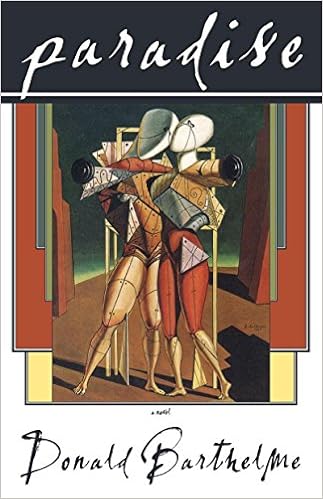
Donald Barthelme


from Robert Kennedy Saved from Drowning


Attitude Toward His Work

      "Sometimes I can't seem to do anything. The work is there, piled up, it seems to me an insurmountable obstacle, really out of reach. I sit and look at it, wondering where to begin, how to take hold of it. Perhaps I pick up a piece of paper, try to read it but my mind is elsewhere, I am thinking of something else, I can't seem to get the gist of it, it seems meaningless, devoid of interest, not having to do with human affairs, drained of life. Then, in an hour, or even a moment, everything changes suddenly I realize I only have to do it, hurl myself into the midst of it, proceed mechanically, the first thing and then the second thing, that it is simply a matter of moving from one step to the next, plowing through it. I become interested, I become excited, I work very fast, things fall into place, I am exhilarated, amazed that these things could ever have seemed dead to me."


Wednesday, January 26, 2022

Donald Barthelme


Me and Miss Mandible

“Debbie’s Kids Are Crying”
“Eddie Asks Debbie: Will You?”
“The Nightmare Liz Has About Debbie!”
“The Things Debbie Can Tell About Eddie”
“The Private Life of Eddie and Liz”
“Debbie Gets Her Man Back?”
“A New Life for Liz”
“Love Is a Tricky Affair”
“Eddie’s Taylor-Made Love Nest”
“How Liz Made a Man of Eddie”
“Are They Planning to Live Together?”
“Isn’t It Time to Stop Kicking Debbie Around?”
“Debbie’s Dilemma”
“Eddie Becomes a Father Again”
“Is Debbie Planning to Re-wed?”
“Can Liz Fulfill Herself?”
“Why Debbie Is Sick of Hollywood”

Donald Barthelme


 Donald Barthelme in 1964.


from The School

The tragedy occurred when Matthew Wein and Tony Mavrogordo were playing over where they’re excavating for the new federal office building. There were all these big wooden beams stacked, you know, at the edge of the excavation. There’s a court case coming out of that, the parents are claiming that the beams were poorly stacked. I don’t know what’s true and what’s not. It’s been a strange year.

I forgot to mention Billy Brandt’s father who was knifed fatally when he grappled with a masked intruder in his home.

One day, we had a discussion in class. They asked me, where did they go? The trees, the salamander, the tropical fish, Edgar, the poppas and mommas, Matthew and Tony, where did they go? And I said, I don’t know, I don’t know. And they said, who knows? and I said, nobody knows. And they said, is death that which gives meaning to life? And I said no, life is that which gives meaning to life. Then they said, but isn’t death, considered as a fundamental datum, the means by which the taken-for-granted mundanity of the everyday may be transcended in the direction of —


Donald Barthelme


from Robert Kennedy Saved from. Drowning

Childhood of K as Recalled by a Former Teacher

      "He was a very alert boy, very bright, good at his studies, very thorough, very conscientious. But that's not unusual, that de- scribes a good number of the boys who pass through here. It's not unusual, that is, to find these qualities which are after all the qualities that we look for and encourage in them. What was unusual about K. was his compassion, something very rare for a boy of that age---even if they have it, they're usually very careful not to display it for fear of seeming soft, girlish. I remember, though, that in K. this particular attribute was very marked. I would almost say that it was his strongest characteristic.

Donald Barthelme


Donald Barthelme, shown here in a 1965 painting by Elaine de Kooning, wrote fiction that was just slightly off-kilter. If you like his work, Biblioracle columnist John Warner has two other books to add to your reading list: "Riots I Have Known" by Ryan Chapman and "The Heap" by Sean Adams. 

Painting by Elaine de Kooning


The New Owner


When he came to look at the building, with a real-estate man hissing and oozing beside him, we lowered the blinds, muted or extinguished lights, threw newspapers and dirty clothes on the floor in piles, burned rubber bands in ashtrays, and played Buxtehude on the hi-fi-shaking organ chords whose vibrations made the plaster falling from the ceiling fall faster. The new owner stood in profile, refusing to shake hands or even speak to us, a tall thin young man suited in hopsacking with a large manila envelope under one arm. We pointed to the plaster, to the crevasses in the walls, sagging ceilings, leaks. Nevertheless, he closed.
Soon he was slipping little rent bills into the mailboxes, slip slip slip slip. In sixteen years we’d never had rent bills but now we have rent bills. He’s raised the rent, and lowered the heat. The owner creeps into the house by night and takes the heat away with him. He wants us out, out. If we were gone, the building would be decontrolled. The rents would climb into the air like steam.
Bicycles out of the halls, says the new owner. Shopping carts out of the halls. My halls.
The new owner stands in profile in the street in front of our building. He looks up the street, then down the street-this wondrous street where our friends and neighbors have lived for decades in Christian, Jewish, and, in some instances, Islamic peace. The new owner is writing the Apartments Unfurn. Ads of the future, in his head.
The new owner fires the old super, simply because the old super is a slaphappy, widowed, shot-up, black, Korean War-sixty-five-percent-disability drunk. There is a shouting confrontation in the basement. The new owner threatens the old super with the police. The old super is locked out. A new super is hired who does not put out the garbage, does not mop the halls, does not, apparently, exist. Roaches prettyfoot into the building because the new owner has stopped the exterminating service. The new owner wants us out.
We whisper to the new owner, through the walls. Go away! Own something else! Don’t own this building! Try the Sun Belt! Try Alaska, Hawaii! Sail away, new owner, sail away!
The new owner arrives, takes out his keys, opens the locked basement. The new owner is standing in the basement, owning the basement, with is single dangling light bulb and the slightly busted souvenirs of all our children’s significant progress. He is taking away the heat, carrying it out with him under his coat, a few pounds at a time, and bringing in with him, a few hundred at a time, his hired roaches.
The new owner stands in the hall, his manila envelope under his arm, owning the hall.
The new owner wants our apartment, and the one below, and the two above, and the one above them. He’s a bachelor, tall thin young man in cheviot, no wife, no children, only buildings. He’s covered the thermostat with a locked clear-plastic case. His manila envelope contains estimates and floor plans and draft Apartment Unfurn. Ads and documents from the Office of Rent and Housing Preservation which speak of Maximum Base Rents and Maximum Collectible Rents and under what circumstances a Senior Citizen Rent Increase Exemption Order may be voided.
Black handprints all over the green of the halls where the new owner has been feeling the building.
The new owner has informed the young cohabiting couple on the floor above us (rear) that they are illegally living in sin and that for this reason he will give them only a month-to-month lease, so that at the end of each and every month they must tremble.
The new owner has informed the old people in the apartment above us (front) that he is prepared to prove that they do not actually live in their apartment in that they are old and so do not, in any real sense, live, and that they are thus subject to a Maximum Real Life Estimate Revision, which, if allowed by the City, will award him their space. Levon and Priscilla tremble.
The new owner stands on the roof, where the tomato plants are, owning the roof. May a good wind blow him to hell.


Glenway Wescott


Wescott

photograph by George Platt Lynes


The Pilgrim Hawk (excerpt)

 Except for that one deformed bit of one foot, Lucy was a perfect example of her species, Falco peregrinus, pilgrim hawk. Her body was as long as her mistress’s arm; the wing feathers in repose a little too long, slung across her back like a folded tent. Her back was an indefinable hue of iron; only a slight patine of the ruddiness of youth still shone on it. Her luxurious breast was white, with little tabs or tassels of chestnut. Out of tasseled pantaloons her legs came down straight to the perch with no apparent flesh on them, enameled a greenish yellow.

But her chief beauty was that of expression. It was like a little flame; it caught and compelled your attention like that, although it did not flicker and there was nothing bright about it nor any warmth in it. It is a look that men sometimes have; men of great energy, whose appetite or vocation has kept them absorbed every instant all their lives. They may be good men but they are often mistaken for evil men, and vice versa. In Lucy’s case it appeared chiefly in her eyes, not black but funereally brown, and extravagantly large, set deep in her flattened head.

Wednesday, January 19, 2022

Raymond Carver


Excerpt from Intimacy


She says, I loved you so much once. I loved you to the point of distraction. I did. More than anything in the whole wide world. Imagine that. What a laugh that is now. Can you imagine it? We were so intimate once upon a time I can’t believe it now. I think that’s the strangest thing of all now. The memory of being that intimate with somebody. We were so intimate I could puke. I can’t imagine ever being that intimate with somebody else. I haven’t been.


Tuesday, January 18, 2022

Raymond Carver


excerpt from Cathedral

There were times when the Englishman who was telling the thing would shut up, would simply let the camera move around over the cathedrals. Or else the camera would tour the countryside, men in fields walking behind oxen. I waited as long as I could. Then I felt I had to say something. I said, “They’re showing the outside of this cathedral now. Gargoyles. Little statues carved to look like monsters. Now I guess they’re in Italy. Yeah, they’re in Italy. There’s paintings on the walls of this one church.”

“Are those fresco painting, bub?” he asked, and he sipped from his drink.

I reached for my glass. But it was empty. I tried to remember what I could remember. “You’re asking me are those frescoes?” I said. “That’s a good question. I don’t know.”

The camera moved to a cathedral outside Lisbon. The difference in the Portuguese cathedral compared with the French and Italian were not that great. But they were there. Mostly the interior stuff. Then something occurred to me, and I said, “Something has occurred to me. Do you have any idea what a cathedral is? What they look like, that is? Do you follow me? If somebody says cathedral to you, do you have any notion what they’re talking about? Do you the difference between that and a Baptist church, say?”

Frank Norris


File:Portrait of Frank Norris.jpg 


excerpt from McTeague

McTeague had told himself that the heat upon the lower slopes of the Panamint had been dreadful; here in Death Valley it became a thing of terror. There was no longer any shadow but his own. He was scorched and parched from head to heel. It seemed to him that the smart of his tortured body could not have been keener if he had been flayed.

"If it gets much hotter," he muttered, wringing the sweat from his thick fell of hair and mustache, "if it gets much hotter, I don' know what I'll do." He was thirsty, and drank a little from his canteen. "I ain't got any too much water," he murmured, shaking the canteen. "I got to get out of this place in a hurry, sure."

By eleven o'clock the heat had increased to such an extent that McTeague could feel the burning of the ground come pringling and stinging through the soles of his boots. Every step he took threw up clouds of impalpable alkali dust, salty and choking, so that he strangled and coughed and sneezed with it.

"LORD! what a country!" exclaimed the dentist.

An hour later, the mule stopped and lay down, his jaws wide open, his ears dangling. McTeague washed his mouth with a handful of water and for a second time since sunrise wetted the flour-sacks around the bird cage. The air was quivering and palpitating like that in the stoke-hold of a steamship. The sun, small and contracted, swam molten overhead.

"I can't stand it," said McTeague at length. "I'll have to stop and make some kinda shade."

The mule was crouched upon the ground, panting rapidly, with half-closed eyes. The dentist removed the saddle, and unrolling his blanket, propped it up as best he could between him and the sun. As he stooped down to crawl beneath it, his palm touched the ground. He snatched it away with a cry of pain. The surface alkali was oven-hot; he was obliged to scoop out a trench in it before he dared to lie down. 


Monday, January 17, 2022

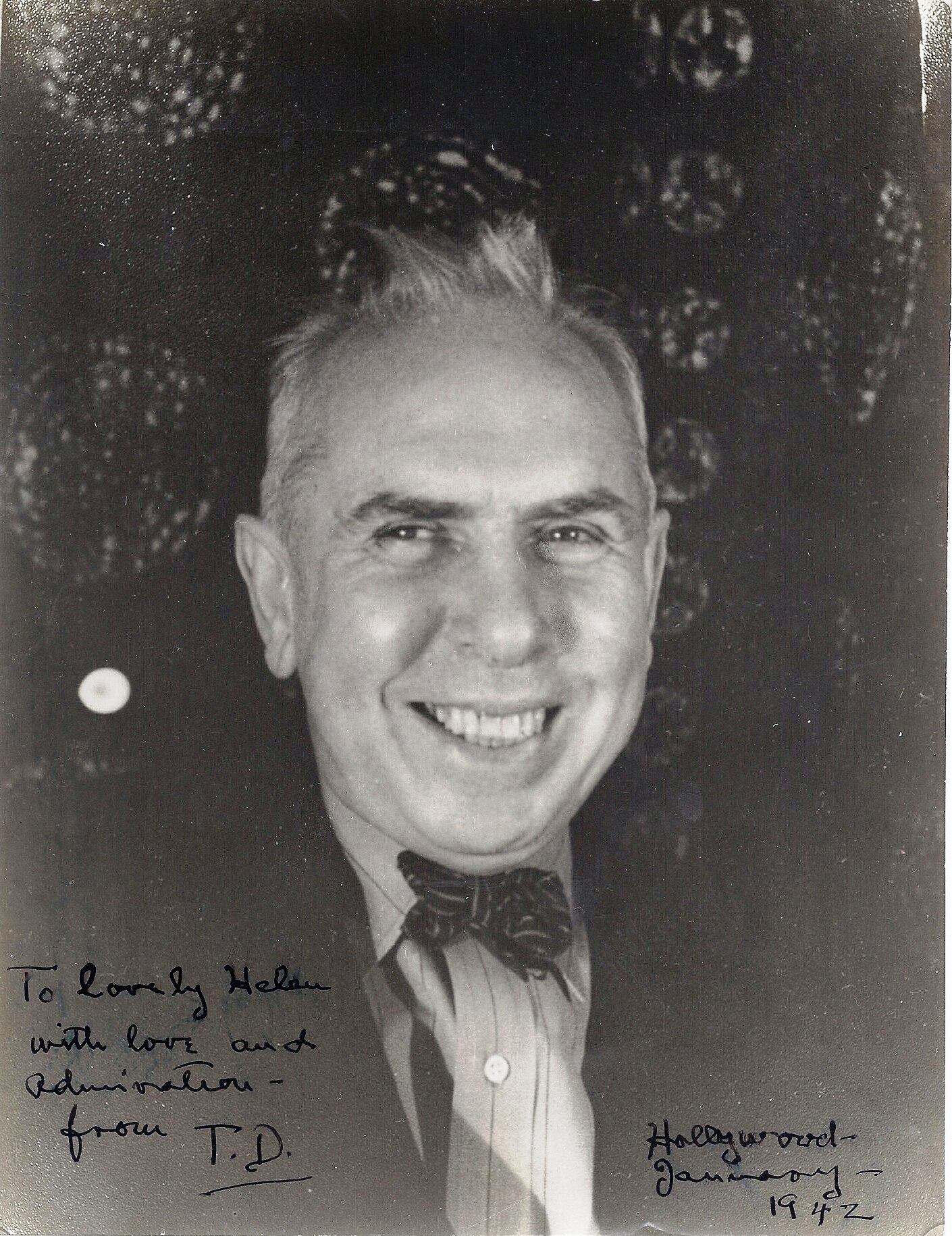
Theodore Dreiser

                photograph by Carl Van Vechten


from An American Tragedy

The boy moved restlessly from one foot to the other, keeping his eyes down, and for the most part only half singing. A tall and as yet slight figure, surmounted by an interesting head and face—white skin, dark hair—he seemed more keenly observant and decidedly more sensitive than most of the others—appeared indeed to resent and even to suffer from the position in which he found himself. Plainly pagan rather than religious, life interested him, although as yet he was not fully aware of this. All that could be truly said of him now was that there was no definite appeal in all this for him. He was too young, his mind much too responsive to phases of beauty and pleasure which had little, if anything, to do with the remote and cloudy romance which swayed the minds of his mother and father.

Indeed the home life of which this boy found himself a part and the various contacts, material and psychic, which thus far had been his, did not tend to convince him of the reality and force of all that his mother and father seemed so certainly to believe and say. Rather, they seemed more or less troubled in their lives, at least materially. His father was always reading the Bible and speaking in meeting at different places, especially in the “mission,” which he and his mother conducted not so far from this corner. At the same time, as he understood it, they collected money from various interested or charitably inclined business men here and there who appeared to believe in such philanthropic work. Yet the family was always “hard up,” never very well clothed, and deprived of many comforts and pleasures which seemed common enough to others. And his father and mother were constantly proclaiming the love and mercy and care of God for him and for all. Plainly there was something wrong somewhere. He could not get it all straight, but still he could not help respecting his mother, a woman whose force and earnestness, as well as her sweetness, appealed to him. Despite much mission work and family cares, she managed to be fairly cheerful, or at least sustaining, often declaring most emphatically “God will provide” or “God will show the way,” especially in times of too great stress about food or clothes. Yet apparently, in spite of this, as he and all the other children could see, God did not show any very clear way, even though there was always an extreme necessity for His favorable intervention in their affairs.

Dashiell Hammett

Samuel Dashiell Hammett

                                     Painting by Edward Bieberman, 1937

from Red Harvest


A WOMAN IN GREEN AND A MAN IN GRAY I first heard Personville called Poisonville by a red-haired mucker named Hickey Dewey in the Big Ship in Butte. He also called his shirt a shoit. I didn't think anything of what he had done to the city's name. Later I heard men who could manage their r's give it the same pronunciation. I still didn't see anything in it but the meaningless sort of humor that used to make richardsnary the thieves' word for dictionary. A few years later I went to Personville and learned better. Using one of the phones in that station, I called the Herald, asked for Donald Willsson, and told him I had arrived. "Will you come out to my house at ten this evening?" He had a pleansantly crisp voice. "It's 2101 Mountain Boulevard. Take a Broadway car, get off at Laurel Avenue, and walk two blocks west." I promised to do that. Then I rode up to the Great Western Hotel, dumped my bags, and went out to look at the city. The city wasn't pretty. Most of its builders had gone in for gaudiness. Maybe they had been successful at first. Since then the smelters whose brick stacks stuck up tall against a gloomy mountain to the south had yellow-smoked everything into uniform dinginess. The result was an ugly city of forty thousand people, set in an ugly notch between two ugly mountains that had been all dirtied up by mining. Spread over this was a grimy sky that looked as if it had come out of the smelters' stacks. The first policeman I saw needed a shave. The second had a couple of buttons off his shabby uniform. The third stood in the center of the city's main intersection--Broadway and Union Street--directing traffic, with a cigar in one corner of his mouth. After that I stopped checking them up. At nine-thirty I caught a Broadway car and followed the directions Donald Willsson had given me. They brought me to a house set in a hedged grassplot on a corner. The maid who opened the door told me Mr. Willsson was not home. While I was explaining that I had an appointment with him a slender blonde woman of something less than thirty in green crepe came to the door. When she smiled her blue eyes didn't lose their stoniness. I repeated my explanations to her. "My husband isn't in now." A barely noticeable accent slurred her s's. "But if he's expecting you he'll probably be home shortly." She took me upstairs to a room on the Laurel Avenue side of the house, a brown and red room with a lot of books in it. We sat in leather chairs, half facing each other, half facing a burning coal grate, and she set about learning my business with her husband. "Do you live in Personville?" she asked first. "No. San Francisco." "But this isn't your first visit?" "Yes." "Really? How do you like our city?" "I haven't seen enough of it to know." That was a lie. I had. "I got in only this afternoon." Her shiny eyes stopped prying while she said: "You'll find it a dreary place." She returned to her digging with: "I suppose all mining towns are like this. Are you engaged in mining?" "Not just now." She looked at the clock on the mantel and said: "It's inconsiderate of Donald to bring you out here and then keep you waiting, at this time of night, long after business hours." I said that was all right. "Though perhaps it isn't a business matter," she suggested. I didn't say anything. She laughed--a short laugh with something sharp in it. "I'm really not ordinarily so much of a busybody as you probably think," she said gaily. "But you're so excessively secretive that I can't help being curious. You aren't a bootlegger, are you? Donald changes them so often." I let her get whatever she could out of a grin. A telephone bell rang downstairs. Mrs. Willsson stretched her green-slippered feet out toward the burning coal and pretended she hadn't heard the bell. I didn't know why she thought that necessary. She began: "I'm afraid I'll ha--" and stopped to look at the maid in the doorway. The maid said Mrs. Willsson was wanted at the phone. She excused herself and followed the maid out. She didn't go downstairs, but spoke over an extension within earshot. I heard: "Mrs. Willsson speaking. . . . Yes. . . . I beg your pardon? . . . Who? . . . Can't you speak a little louder? . . . What? . . . Yes. . . . Yes. . . . Who is this? . . . Hello! Hello!" The telephone hook rattled. Her steps sounded down the hallway--rapid steps. I set fire to a cigarette and stared at it until I heard her going down the steps. Then I went to a window, lifted an edge of the blind, and looked out at Laurel Avenue, and at the square white garage that stood in the rear of the house on that side. Presently a slender woman in dark coat and hat came into sight hurrying from house to garage. It was Mrs. Willsson. She drove away in a Buick coupe. I went back to my chair and waited. Three-quarters of an hour went by. At five minutes after eleven, automobile brakes screeched outside. Two minutes later Mrs. Willsson came into the room. She had taken off hat and coat. Her face was white, her eyes almost black. "I'm awfully sorry," she said, her tight-lipped mouth moving jerkily, "but you've had all this waiting for nothing. My husband won't be home tonight." I said I would get in touch with him at the Herald in the morning. I went away wondering why the green toe of her left sli 

Saul Bellow


Family photo of Saul Bellow


from Herzog

If I am out of my mind, it’s all right with me, thought Moses Herzog.

Some people thought he was cracked and for a time he himself had doubted that he was all there. But now, though he still behaved oddly, he felt confident, cheerful, clairvoyant, and strong. He had fallen under a spell and was writing letters to everyone under the sun. He was so stirred by these letters that from the end of June he moved from place to place with a valise full of papers. He had carried this valise from New York to Martha’s Vineyard, but returned from the Vineyard immediately; two days later he flew to Chicago, and from Chicago he went to a village in western Massachusetts. Hidden in the country, he wrote endlessly, fanatically, to the newspapers, to people in public life, to friends and relatives and at last to the dead, his own obscure dead, and finally the famous dead.

It was the peak of summer in the Berkshires. Herzog was alone in the big old house. Normally particular about food, he now ate Silvercup bread from the paper package, beans from the can, and American cheese. Now and then he picked raspberries in the overgrown garden, lifting up the thorny canes with absent-minded caution. As for sleep, he slept on a mattress without sheets – it was his abandoned marriage bed – or in the hammock, covered by his coat. Tall bearded grass and locust and maple seedlings surrounded him in the yard. When he opened his eyes in the night, the stars were near like spiritual bodies. Fires, of course; gases – minerals, heat, atoms, but eloquent at five in the morning to a man lying in a hammock, wrapped in his overcoat.

When some new thought gripped his heart he went to the kitchen, his headquarters, to write it down. The white paint was scaling from the brick walls and Herzog sometimes wiped mouse droppings from the table with his sleeve, calmly wondering why field mice should have such a passion for wax and paraffin. They made holes in paraffin-sealed preserves; they gnawed birthday candles down to the wicks. A rat chewed into a package of bread, leaving the shape of its body in the layers of slices. Herzog ate the other half of the loaf spread with jam. He could share with rats too.

All the while, one corner of his mind remained open to the external world. He heard the crows in the morning. Their harsh call was delicious. He heard the thrushes at dusk. At night there was a barn owl. When he walked in the garden, excited by a mental letter, he saw roses winding about the rain spout; or mulberries – birds gorging in the mulberry tree. The days were hot, the evenings flushed and dusty. He looked keenly at everything but he felt half blind.


Saul Bellow


from Humboldt's Gift

“There are a few things I have to get off my chest about Humboldt. Why should Humboldt have bothered himself so much? A poet is what he is in himself. Gertrude Stein used to distinguish between ‘a person who is an ‘entity’ and one who has an ‘identity.A significant man is an entity. Identity is what they give you socially. Your little dog recognizes you and therefore you have an identity. An entity by contrast, an impersonal power, can be a frightening thing. It's as T, S. Eliot said of William Blake. A man like Tennyson was merged into his environment or encrusted with parasitic opinion, but Blake was naked and saw man naked, and from the center of his own crystal. There was nothing of the ‘superior person’ about him, and this made him terrifying. That is an entity. An identity is easier on itself. An identity pours a drink, lights a cigarette seeks its human pleasure, and shuns rigorous conditions. The temptation to lie down is very great. Humboldt was a weakening entity. Poets have to dream, and dreaming in America is no cinch. God ‘giveth songs in the night,the Book of Job says. I've devoted lots of thought to all these questions and famous insomnia. But I think that Humboldt's insomnia testified mostly to the strength of the world, the human world and all its wonderful works. The world was interesting, really ;nteresting. The world had money, science, war, politics, anxiety, sickness perplexity. It had all the voltage. Once you had picked up the high‐voltage wire and were someone, a known name, you couldn't release yourself from the electrical current. You were transfixed. Okay, Renate, I'm summarizing: the world has power, and interest follows power. Where are the poets’ power and interest? They originate in dream states. These come because the poet is what he is in himself because a voice sounds in his soul which has a power equal to the power of societies, states, and regimes. You don't make yourself interesting through madness, eccentricity, or anything of the sort but because you have the power to cancel the world's distraction, activity, noise, and become fit to hear the essence of things. I can't tell you how terrible he looked last time I him.”

—Viking Press New York, 1975


Saul Bellow


Excerpt
Ravelstein

Odd that mankind's benefactors should be amusing people. In America at least this is often the case. Anyone who wants to govern the country has to entertain it. During the Civil War people complained about Lincoln's funny stories. Perhaps he sensed that strict seriousness was far more dangerous than any joke. But critics said that he was frivolous and his own Secretary of War referred to him as an ape. 

Among the debunkers and spoofers who formed the tastes and minds of my generation H. L. Mencken was the most prominent. My high school friends, readers of the American Mercury, were up on the Scopes trial as Mencken reported it. Mencken was very hard on William Jennings Bryan and the Bible Belt and Boobus Americanus. Clarence Darrow, who defended Scopes, represented science, modernity, and progress. To Darrow and Mencken, Bryan the Special Creationist was a doomed Farm Belt absurdity. In the language of evolutionary theory Bryan was a dead branch of the life-tree. His Free Silver monetary standard was a joke. So was his old-style congressional oratory. So were the huge Nebraska farm dinners he devoured. His meals, Mencken said, were the death of him. His views on Special Creation were subjected to extreme ridicule at the trial, and Bryan went the way of the pterodactyl - the clumsy version of an idea which later succeeded - the gliding reptiles becoming warm-blooded birds that flew and sang. 

I filled up a scribbler with quotes from Mencken and later added notes from spoofers or self-spoofers like W. C. Fields or Charlie Chaplin, Mae West, Huey Long, and Senator Dirksen. There was even a page on Machiavelli's sense of humor. But I'm not about to involve you in my speculations on wit and self-irony in democratic societies. Not to worry. I'm glad my old scribbler has disappeared. I have no wish to see it again. It surfaces briefly as a sort of extended footnote. 

I have always had a weakness for footnotes. For me a clever or a wicked footnote has redeemed many a text. And I see that I am now using a long footnote to open a serious subject-shifting in a quick move to Paris, to a penthouse in the Hotel Crillon. Early June. Breakfast time. The host is my good friend Professor Ravelstein, Abe Ravelstein. My wife and I, also staying at the Crillon, have a room below, on the sixth floor. She is still asleep. The entire floor below ours (this is not absolutely relevant but somehow I can't avoid mentioning it) is occupied just now by Michael Jackson and his entourage. He performs nightly in some vast Parisian auditorium. Very soon his French fans will arrive and a crowd of faces will be turned upward, shouting in unison, Miekell Jack-sown. A police barrier holds the fans back. Inside, from the sixth floor, when you look down the marble stairwell you see Michael's bodyguards. One of them is doing the crossword puzzle in the Paris Herald

"Terrific, isn't it, having this pop circus?" said Ravelstein

Raymon Chandler on Dashiell Hammett


1 Chandler


How original a writer Hammett really was, it isn’t easy to decide now, even if it mattered. He was one of a group, the only one who achieved critical recognition, but not the only one who wrote or tried to write realistic mystery fiction. All literary movements are like this; some one individual is picked out to represent the whole movement; he is usually the culmination of the movement. Hammett was the ace performer, but there is nothing in his work that is not implicit in the early novels and short stories of Hemingway. Yet for all I know, Hemingway may have learned something from Hammett, as well as from writers like Dreiser, Ring Lardner, Carl Sandburg, Sherwood Anderson and himself. A rather revolutionary debunking of both the language and material of fiction had been going on for some time. It probably started in poetry; almost everything does. You can take it clear back to Walt Whitman, if you like. But Hammett applied it to the detective story, and this, because of its heavy crust of English gentility and American pseudo- gentility, was pretty hard to get moving. I doubt that Hammett had any deliberate artistic aims whatever; he was trying to make a living by writing something he had first hand information about. He made some of it up; all writers do; but it had a basis in fact; it was made up out of real things. The only reality the English detection writers knew was the conversational accent of Surbiton and Bognor Regis. If they wrote about dukes and Venetian vases, they knew no more about them out of their own experience than the well-heeled Hollywood character knows about the French Modernists that hang in his Bel-Air château or the semi-antique Chippendale-cum-cobbler’s bench that he uses for a coffee table. Hammett took murder out of the Venetian vase and dropped it into the alley; it doesn’t have to stay there forever, but it was a good idea to begin by getting as far as possible from Emily Post’s idea of how a well-bred debutante gnaws a chicken wing. He wrote at first (and almost to the end) for people with a sharp, aggressive attitude to life. They were not afraid of the seamy side of things; they lived there. Violence did not dismay them; it was right down their street.

Hammett gave murder back to the kind of people that commit it for reasons, not just to provide a corpse; and with the means at hand, not with hand-wrought duelling pistols, curare, and tropical fish. He put these people down on paper as they are, and he made them talk and think in the language they customarily used for these purposes. He had style, but his audience didn’t know it, because it was in a language not supposed to be capable of such refinements. They thought they were getting a good meaty melodrama written in the kind of lingo they imagined they spoke themselves. It was, in a sense, but it was much more. All language begins with speech, and the speech of common men at that, but when it develops to the point of becoming a literary medium it only looks like speech. Hammett’s style at its worst was almost as formalized as a page of Marius the Epicurean; at its best it could say almost anything. I believe this style, which does not belong to Hammett or to anybody, but is the American language (and not even exclusively that any more), can say things he did not know how to say or feel the need of saying. In his hands it had no overtones, left no echo, evoked no image beyond a distant hill. He is said to have lacked heart, yet the story he thought most of himself is the record of a man’s devotion to a friend. He was spare, frugal, hardboiled, but he did over and over again what only the best writers can ever do at all. He wrote scenes that seemed never to have been written before.

The above passages are extracts from Raymond Chandler’s 1950 essay The simple art of Murder. 

Jean-Patrick Manchette


manchette-portrait432

3 to Kill

(Excerpt)

Translated by Donald Nicholson-Smith

Chapter One

And sometimes what used to happen was what is happening now: Georges Gerfaut is driving on Paris’s outer ring road. He has entered at the Porte d’Ivry. It is 2:30 or maybe 3:15 in the morning. A section of the inner ring road is closed for cleaning, and on the rest of the inner ring road traffic is almost nonexistent. On the outer ring road there are perhaps two or three or at the most four vehicles per kilometer. Some are trucks, many of them very slow moving. The other vehicles are private cars, all traveling at high speed, well above the legal limit. This is also true of Georges Gerfaut. He has had five glasses of Four Roses bourbon. And about three hours ago he took two capsules of a powerful barbiturate. The combined effect on him has not been drowsiness but a tense euphoria that threatens at any moment to change into anger or else into a kind of vaguely Chekhovian and essentially bitter melancholy, not a very valiant or interesting feeling. Georges Gerfaut is doing 145 kilometers per hour.

Georges Gerfaut is a man under 40. His car is a steel-gray Mercedes. The leather upholstery is mahogany brown, matching all the fitting of the vehicle’s interior. As for Georges Gerfaut’s interior, it is somber and confused; a clutch of left-wing ideas may just be discerned. On the car’s dashboard, below the instrument panel, is a matte metal plate with George’s name, address, and blood group engraved up it, along with a piss-poor depiction of Saint Christopher. Via two speakers, one beneath the dashboard, the other on the back-window deck, a tape player is quietly diffusing West Coast-style jazz: Gerry Mulligan, Jimmy Giuffre, Bud Shank, Chico Hamilton. I know, for instance, that at one point it is Rube Bloom and Ted Koehler’s “Truckin” that is playing, as recorded by the Bob Brookmeyer Quintet.

The reason why Georges is barreling along the outer ring road, with diminished reflexes, listening to this particular music, must be sought first and foremost in the position occupied by Georges in the social relations of production. The fact that Georges has killed at least two men in the course of the last year is not germane. What is happening now used to happen from time to time in the past.

End of Chapter

Barbara Guest

  Santa Fe Trail I go separately The sweet knees of oxen have pressed a path for me ghosts with ingots have burned their bare hands it is th...