

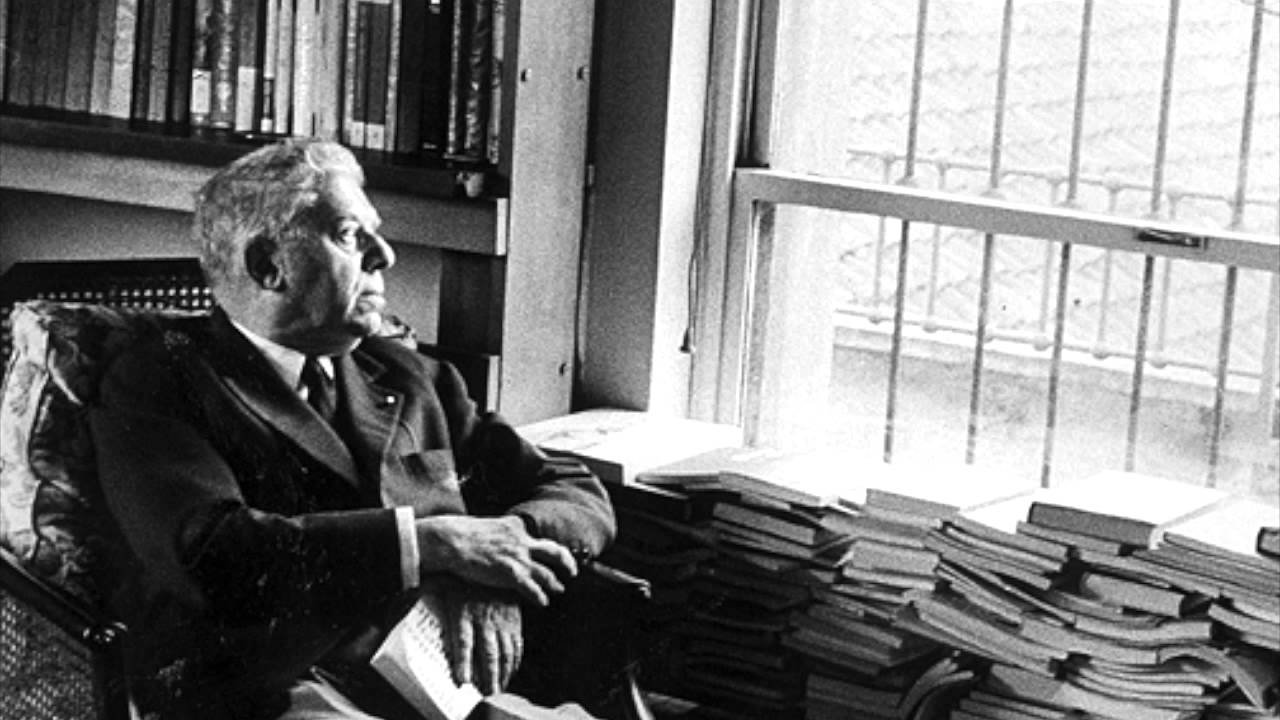
“The technique of simultaneousness introduced in poetry by Apollinaire consists in joining the events, not by giving them an order of place and time but by registering them successively as they come to mind in the presence of a given face, or a given idea, or a given recollection of a person. It has been said in a more elaborate way, by (James) Joyce it has now been used by many, and it is used also by Ginsberg..
(from “A Presentation of Allen Ginsberg’s Poems”
“In a vast hall in the Village, crowded with the curious, Ginsberg and I met in New York to read together, each some of his own poems. I believe I have returned this evening – and I am proud of it – the tribute of brotherly enthusiasm that he wanted then, through his kindness, to offer to me.”
(ibid)
Ron Padgett tells a story – “New York, circa 1965. We (Ted Berrigan and I) saw some amazing things together. We saw the venerable Giuseppe Ungaretti reach down into his pants and pluck out a pubic hair, hold it up and exclain, “C’est blanc!“. Ungaretti was making a contribution to the pubic hair collection being assembled by Allen Ginsberg to give to Ed Sanders, who was selling unusual literary items in his mail-order catalog”
Andrew Wylie, Ungaretti’s early translator is now Allen’s literary agent.
Bill Morgan on Louis and Edith (his father and stepmother) and Allen in Venice – “They met Ungaretti on the Piazetta San Marco in the moonlight and it was a spectacular way to end their vacation.”
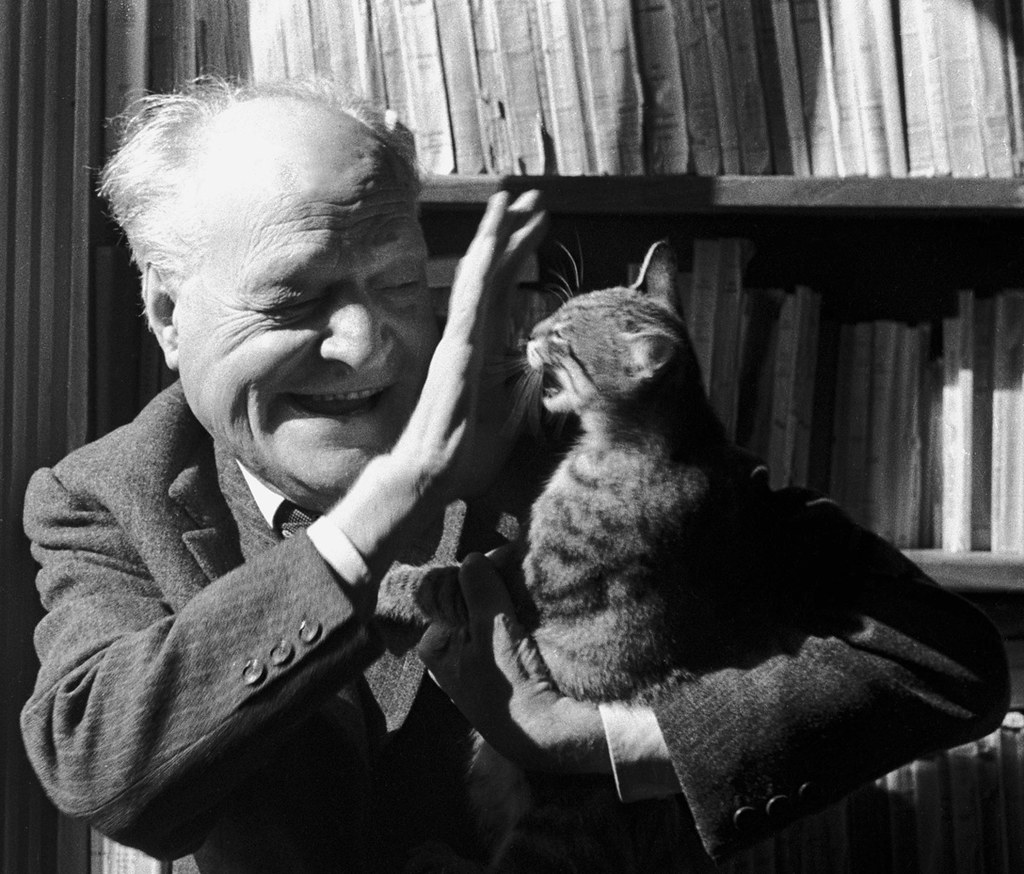
Giuseppe Ungaretti died 42 years ago on this day.

People talk and talk more
about black holes.
I believe the blackest hole
is the one we inhabit,
and that maybe someone outside it
wonders if in here there exist
beasts with two legs or four
or no beasts at all, and that nobody
even mentions plants or flowers.
Wooden Heart

Bring Me the Sunflower
Bring me the sunflower so I can transplant it
here in my own field burned by salt-spray,
so it can show all day to the blue reflection of the sky
the anxiety of its golden face.
Darker things yearn for a clarity,
bodies fade and exhaust themselves in a flood
of colors, as colors do in music. To vanish,
therefore, is the best of all good luck.
Bring me the plant that leads us
where blond transparencies rise up
and life evaporates like an essence;
bring me the sunflower sent mad with light.
translated by Charles Wright
The Storm
Les princes n'ont point d'yeux pour voir ces grand's merveilles,
Leurs mains ne servent plus qu' à nous persécuter . . .
(Agrippa D' Aubigné: À Dieu)
The storm that trickles its long March
thunderclaps, its hail, onto the stiff
leaves of the magnolia tree;
(sounds of shaking crystal which startle you
in your nest of sleep; and the gold
snuffed on the mahogany, on the backs
of the bound books, flares again
like a grain of sugar in the shell
of your eyelids)
the lightning that blanches
the trees and walls, freezing them
like images on a negative (a benediction
and destruction you carry carved
within you, a condemnation that binds you
stronger to me than any love, my strange sister);
and then the tearing crash, the jangling sistrums, the rustle
of tambourines in the dark ditch of the night,
the tramp, scrape, jump of the fandango. . .and overhead
some gesture that blindly is groping. . .
as when
turning around, and, sweeping clear your forehead
of its cloud of hair,
you waved to me—and entered the dark.
translated by Charles Wright
CONCERNING THE UNIVERSE. THE CITY OF GOD
Concerning the universe, the city of God,
we know very little.
It was cooked for a long time
over a low flame.
Now, according to some idiots,
things are speeding up,
an acceleration that seems almost
a prelude to total extinction.
Perhaps thought itself will survive
without the one doing the thinking.
What’s left is sheer absurdity,
the black hole, the Encyclopedia
of zero.
Translation by George Bradley

Ulysses
Once in my younger days I sailed the length
of the Dalmation coast. Islets of rock
lilied the surface of the water, perches
for the occasional bird intent on food.
The rocks were slick and algae-draped and bright
as emeralds in the sun, but when high tide
or night concealed them, any sail with wind
would veer toward deeper water to avert
their treachery. And now I am the king
of no man’s land. The harbor-lights are lit
for others; I again turn to the sea,
still driven by an unextinguished spirit,
by this excruciating love for life.
Love
I say goodbye when I approach you, Love,
as this age and this gray would have me do.
There was the shadow of the earth and sun
and, oh, the heart of a heartless boy in you.
The broken pane
It all conspires against you. Nasty weather,
lights that keep going out, and the old house
jolted by every gust. It’s dear to you
for what you suffered in it, for the hopes
dashed there, and for a few good times as well.
Survival seems to you a refusal to obey
the way of things.
And in the shattering
of a window pane, you hear a judgment passed.
 | ||
Soldati (Soldiers):
Si sta come
d’autonno
sugli alberi
le foglie
Translates: We are as / in autumn / on branches / the leaves.
The Storm
Les princes n'ont point d'yeux pour voir ces grand's merveilles,
Leurs mains ne servent plus qu' à nous persécuter . . .
(Agrippa D' Aubigné: À Dieu)
The storm that trickles its long March
thunderclaps, its hail, onto the stiff
leaves of the magnolia tree;
(sounds of shaking crystal which startle you
in your nest of sleep; and the gold
snuffed on the mahogany, on the backs
of the bound books, flares again
like a grain of sugar in the shell
of your eyelids)
the lightning that blanches
the trees and walls, freezing them
like images on a negative (a benediction
and destruction you carry carved
within you, a condemnation that binds you
stronger to me than any love, my strange sister);
and then the tearing crash, the jangling sistrums, the rustle
of tambourines in the dark ditch of the night,
the tramp, scrape, jump of the fandango. . .and overhead
some gesture that blindly is groping. . .
as when
turning around, and, sweeping clear your forehead
of its cloud of hair,
you waved to me—and entered the dark.
translated by Charles Wright
Santa Fe Trail I go separately The sweet knees of oxen have pressed a path for me ghosts with ingots have burned their bare hands it is th...


Translation from Italian & Commentary by Peter Valente
[These poems are part of a sequence whose central focus is Pasolini’s love for the young actor Ninetto Davoli. They are selected from the 112 works that exist in various states of draft and revision, most of them written during the filming of the “Canterbury Tales” in England and completed on Pasolini’s return to Italy. The last poem in the sequence is dated “February 1973.”]
1/
Your place was at my side,
and you were proud of this.
But, sitting with your arm on the steering wheel
you said, “I can’t go on. I must stay here, alone.”
If you remain in this provincial village you’ll fall into a trap.
We all do. I don’t know how or when but you will.
The years that comprise a life vanish in an instant.
You are quiet, pensive. I know it is love
that is tearing us apart.
I have given you
all the power of my existence,
yet you are humble and proud, obeying a destiny
that wants you to remain impoverished. You don’t know
what to do, whether to give in or not.
I can’t pretend your resistance
doesn’t cause me pain.
I can see the future. There is blood on the sand.
Canterbury
2/
I think of you and I say to myself: “ I have lost him.”
I cannot bear the pain and wish I were dead. A minute
or so passes and I reconsider. With joy
I take back strength from your image. I refuse to cry.
My mind is changed.
Then again I consider you, lost and alone.
Who is this ugly gentleman
who does not understand what concerns him most? Are you
or are you not this Other,
he who always loses without really dying?
He is my double: I, pedantic. He, informal.
Knowledge of him has changed everything in my life.
He says that if I am lost he will find me.
He knows that when he does I will be dead.
Bath, October 24, 1971
3/
That Freud that you enjoy reading doesn’t
clarify what I desire. You came here,
and I repeat –Nothing binds you to me.
Yet you decide to stay.
The man who prays and does not feel shame, who desires
his mother’s nest for comfort, will lead a false life.
A desolate life. You will deny this.
But remember his cry is not for you.
It is for his own ass.
You came to teach me things I had not known before
but the angel appears and you are silent again.
He is soon gone. And still you are anxious.
Pleasure suspends my anguish.
But I know afterwards regret will shatter our fragile peace.
4/
There existed in this world a thing without price.
It was unique. Few were aware of it.
No code of the Church could classify it.
I confronted it midway on life’s journey
with no guide to lead me through this hell.
In the end there was no sense in it
tho it consumed the whole of my reality.
You wanted to destroy any good that came from it,
slowly, slowly, with your delicate hands.
You were not devoted and yet I cannot understand
why there was so much fury in your soul
against a love that was so chaste.
Benevento, Feb. 3, 1973
5/
The wind screamed through the Piazza dei Cinquecento
as in a Church –there was no sign of filth.
I was driving alone on the deserted streets. It was almost 2 am.
In the small garden I see the last two or three boys,
neither Roman nor of the peasantry, cruising for
1000 lire. Their faces are stone cold. But they have no balls.
I stopped the car and called out to one of them.
He was a fascist, down on his luck, and I struggled
to touch his desperate heart.
But in the dark I could see himwatching me.
You have come with your car and had your fun, Paolo.
The degenerate individual was here next to you. He is your double.
Cheap stolen trinkets hang from his car window.
Now you must leave
but where can you go? He is always there.
NOTE. Giovanni (“Ninetto”) Davoli was born on October 11, 1948 in San Pietro a Maida, Calabria. During the shooting of “La Ricotta” (1963), he was introduced to Pasolini. He was fourteen years old. Pasolini had just turned forty. Pasolini wrote, “Everything about him has a magical air…an endless reserve of happiness.” Soon Ninetto became part of Pasolini’s entourage and began appearing in his films. He was first cast in “The Gospel According to St. Mathew” (1964) and appeared in many others films culminating with “The Arabian Nights” in 1974. He has said of his relationship to Pasolini, “In me, he found the naturalness of the world he knew growing up.” This was the world that Pasolini saw devastated and ultimately obliterated by the changes that Italy was undergoing in the 60s.
Ninetto told Pasolini, during the filming of the “Canterbury Tales”, that on his return to Rome he intended to marry. Pasolini writes, “I am insane with grief. Ninetto is finished. After almost nine years, there is no more Ninetto. I have lost the meaning of my life…Everything has collapsed around me.” In January 1973, Ninetto married. He promised Pasolini that nothing fundamental would change as a result of his marriage. But Pasolini was inconsolable.
The poems begun on August 20, 1971 chart the series of emotional upheavals Pasolini underwent during the time leading up to and after the wedding. He writes that Ninetto “is tired of our relationship. It has lost / all sense of novelty for him. The duty of a new life / distracts him.” He writes of Ninetto’s fiancée , “She blamed you for your innocent abandonments…She wants everything./ She is desperate and without hope, / without any compassion.” In another poem he accuses Ninetto, “This love/ does not glorify you. It humiliates you. /…You love her only if she weeps and is humiliated./You don’t know how to maintain her / nor do you really want to.” His anger turns to regret: “But you, so happy, you/ the very image of happiness, now/ that you are gone from my life.” Finally his anger subsides and he writes on February 1, 1973, “But seeing that you have retained a little love for me / exclusively, this means everything.” Pasolini’s relationship with Ninetto had changed into something else. Desire had given way to affection and loyalty. Pasolini cast him as Aziz in the “Arabian Nights,” a character he described as “joy, happiness, a living ballet.” Ninetto’s first son was named Pier Paolo.
Peter Valente