Showing posts with label mid-century. Show all posts

Wednesday, February 16, 2022

Randall Jarrell


The Woman At The Washington Zoo

The saris go by me from the embassies.

Cloth from the moon. Cloth from another planet.  
They look back at the leopard like the leopard.

And I. . . .
this print of mine, that has kept its color
Alive through so many cleanings; this dull null
Navy I wear to work, and wear from work, and so
To my bed, so to my grave, with no
Complaints, no comment: neither from my chief,
The Deputy Chief Assistant, nor his chief--
Only I complain. . . . this serviceable
Body that no sunlight dyes, no hand suffuses
But, dome-shadowed, withering among columns,
Wavy beneath fountains--small, far-off, shining
In the eyes of animals, these beings trapped
As I am trapped but not, themselves, the trap,
Aging, but without knowledge of their age,
Kept safe here, knowing not of death, for death--
Oh, bars of my own body, open, open!

The world goes by my cage and never sees me.
And there come not to me, as come to these,
The wild beasts, sparrows pecking the llamas' grain,
Pigeons settling on the bears' bread, buzzards
Tearing the meat the flies have clouded. . . .
Vulture,
When you come for the white rat that the foxes left, 
Take off the red helmet of your head, the black
Wings that have shadowed me, and step to me as man:
The wild brother at whose feet the white wolves fawn,
To whose hand of power the great lioness
Stalks, purring. . . .
You know what I was,
You see what I am: change me, change me!

Randall Jarrell

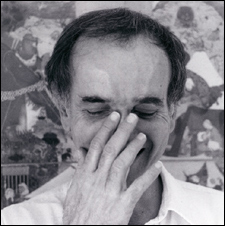
 Randall Jarrell

    Photograph by Rollie McKenna, 1952.


The Refugees

In the shabby train no seat is vacant.
The child in the ripped mask
Sprawls undisturbed in the waste
Of the smashed compartment. Is their calm extravagant?
They had faces and lives like you. What was it they possessed
That they were willing to trade for this?
The dried blood sparkles along the mask
Of the child who yesterday possessed
A country welcomer than this.
Did he? All night into the waste
The train moves silently. The faces are vacant.
Have none of them found the cost extravagant?
How could they? They gave what they possessed.
Here all the purses are vacant.
And what else could satisfy the extravagant
Tears and wish of the child but this?
Impose its canceling terrible mask
On the days and faces and lives they waste?
What else are their lives but a journey to the vacant
Satisfaction of death? And the mask
They wear tonight through their waste
Is death's rehearsal. Is it really extravagant
To read in their faces: What is there we possessed
That we were unwilling to trade for this?

Randall Jarrell

Randall Jarrell 

                Painting by Betty Watson, 1963


The Black Swan

When the swans turned my sister into a swan
I would go to the lake, at night, from milking:
The sun would look out through the reeds like a swan,
A swan's red beak; and the beak would open
And inside there was darkness, the stars and the moon.

Out on the lake, a girl would laugh.
"Sister, here is your porridge, sister,"
I would call; and the reeds would whisper,
"Go to sleep, go to sleep, little swan."
My legs were all hard and webbed, and the silky

Hairs of my wings sank away like stars
In the ripples that ran in and out of the reeds:
I heard through the lap and hiss of water
Someone's "Sister . . . sister," far away on the shore,
And then as I opened my beak to answer

I heard my harsh laugh go out to the shore
And saw - saw at last, swimming up from the green
Low mounds of the lake, the white stone swans:
The white, named swans . . . "It is all a dream,"
I whispered, and reached from the down of the pallet

To the lap and hiss of the floor.
And "Sleep, little sister," the swan all sang
From the moon and stars and frogs of the floor.
But the swan my sister called, "Sleep at last, little sister,"
And stroked all night, with a black wing, my wings.

Stanley Kunitz

Halley's Comet
Miss Murphy in first grade
wrote its name in chalk 
across the board and told us 
it was roaring down the stormtracks
of the Milky Way at frightful speed
and if it wandered off its course 
and smashed into the earth
there'd be no school tomorrow.
A red-bearded preacher from the hills 
with a wild look in his eyes 
stood in the public square 
at the playground's edge 
proclaiming he was sent by God 
to save every one of us,
even the little children.
"Repent, ye sinners!" he shouted, 
waving his hand-lettered sign. 
At supper I felt sad to think 
that it was probably 
the last meal I'd share 
with my mother and my sisters;
but I felt excited too
and scarcely touched my plate. 
So mother scolded me 
and sent me early to my room. 
The whole family's asleep 
except for me. They never heard me steal 
into the stairwell hall and climb 
the ladder to the fresh night air.

Look for me, Father, on the roof 
of the red brick building 
at the foot of Green Street --
that's where we live, you know, on the top floor.
I'm the boy in the white flannel gown
sprawled on this coarse gravel bed
searching the starry sky, 
waiting for the world to end.

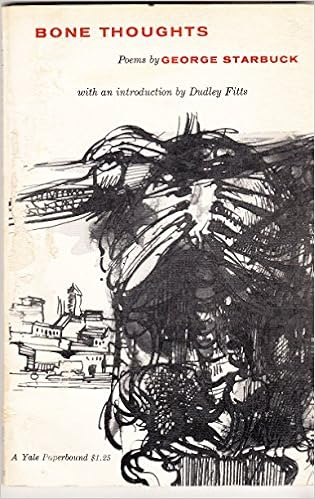
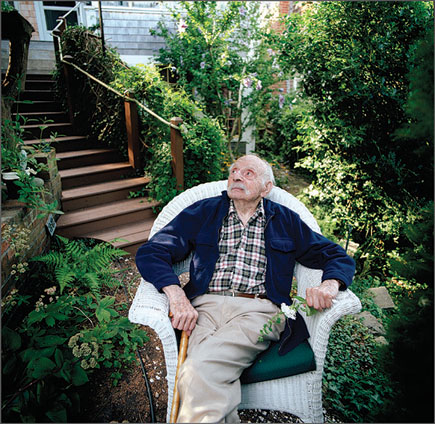
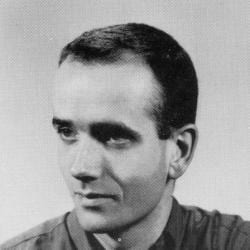
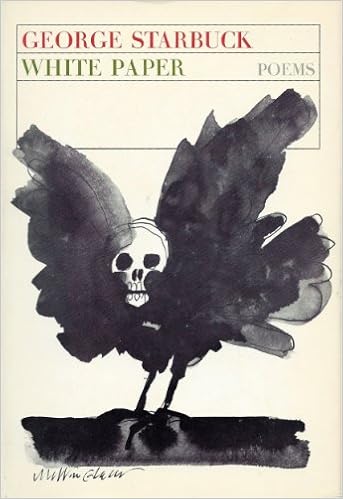
George Starbuck


Working Habits

Federico Garcia Lorca 

used to uncork a 
bottle or two of wine 
whenever the duende dwindled for a line. 

James Joyce 
would have preferred a choice 
of brandies in decanters made by Tiffany's,  
but rotgut was the shortcut to epiphanies. 

The Later Henry James 
bet shots of rum against himself in games  
of how much can we pyramid upon a  
given donnĂ©. 

Little Dylan Thomas 
didn't keep his promise 
to stay out of Milk Wood. 
He tried to drown the fact as best he could. 

Anna Akhmatova 
Eyed the last shot of a 
Pre-war cognac de champagne. 
"So much for you, little brandy. Do svidanya." 

T. S. Eliot 
used to belly it 
up to the nearest bar, 
then make for a correlative objective in his car. 

Proust  
used 
to 
too.

George Starbuck


427458 


Of Late

"Stephen Smith, University of Iowa sophomore, burned what he said was his draft card" 
and Norman Morrison, Quaker, of Baltimore Maryland, burned what he said was himself. 
You, Robert McNamara, burned what you said was a concentration 
of the Enemy Aggressor. 
No news medium troubled to put it in quotes. 

And Norman Morrison, Quaker, of Baltimore Maryland, burned what he said was himself. 
He said it with simple materials such as would be found in your kitchen. 
In your office you were informed. 
Reporters got cracking frantically on the mental disturbance angle. 
So far nothing turns up. 

Norman Morrison, Quaker, of Baltimore Maryland, burned, and while burning, screamed. 
No tip-off. No release. 
Nothing to quote, to manage to put in quotes. 
Pity the unaccustomed hesitance of the newspaper editorialists. 
Pity the press photographers, not called. 

Norman Morrison, Quaker, of Baltimore Maryland, burned and was burned and said 
all that there is to say in that language. 
Twice what is said in yours. 
It is a strange sect, Mr. McNamara, under advice to try 
the whole of a thought in silence, and to oneself. 

Tuesday, February 15, 2022

Stanley Kunitz


After The Last Dynasty

Reading in Li Po
how "the peach blossom follows the water"
I keep thinking of you
because you were so much like
Chairman Mao,
naturally with the sex 
transposed
and the figure slighter.
Loving you was a kind
of Chinese guerilla war.
Thanks to your lightfoot genius
no Eighth Route Army
kept its lines more fluid,
traveled with less baggage
so nibbled the advantage.
Even with your small bad heart
you made a dance of departures.
In the cold spring rains
when last you failed me
I had nothing left to spend
but a red crayon language
on the character of the enemy
to break appointments,
to fight us not
with his strength
but with his weakness,
to kill us
not with his health
but with his sickness.
Pet, spitfire, blue-eyed pony,
here is a new note
I want to pin on your door,
though I am ten years late
and you are nowhere:
Tell me,
are you stillmistress of the valley,
what trophies drift downriver,
why did you keep me waiting?

Monday, February 14, 2022

George Starbuck


George Starbuck John Simon Guggenheim Foundation George Starbuck


Sonnet with a Different Letter at the End of Every Line


for Helen Vendler

O for a muse of fire, a sack of dough,   
Or both! O promissory notes of woe!   
One time in Santa Fe N.M.
Ol’ Winfield Townley Scott and I ... But whoa.

One can exert oneself, ff,
Or architect a heaven like Rimbaud,
Or if that seems, how shall I say, de trop,   
One can at least write sonnets, a propos   
Of nothing save the do-re-mi-fa-sol   
Of poetry itself. Is not the row
Of perfect rhymes, the terminal bon mot,   
Obeisance enough to the Great O?

“Observe,” said Chairman Mao to Premier Chou,   
“On voyage Ă  Parnasse pour prendre les eaux.   
On voyage comme poisson, incog.”


George Starbuck


Fable for Blackboard

Here is the grackle, people.
Here is the fox, folks.
The grackle sits in the bracken. The fox   
   hopes.

Here are the fronds, friends,
that cover the fox.
The fronds get in a frenzy. The grackle   
   looks.

Here are the ticks, tykes,   
that live in the leaves, loves.   
The fox is confounded,
and God is above.


George Starbuck


Starbuck


On Reading John Hollander’s Poem “Breadth. Circle. Desert. Monarch. Month. Wisdom. (for which there are no rhymes)”

“Breadth. Circle. Desert. Monarch. Month. Wisdom. (for which there are
No rhymes
)” was just the title, and I only read that far.

That was because I felt like some old agent-of-the-Czar
When a new plotter swims within the scope of his exertions,
And I was scared this hothead would start hedging his assertions
Before I had him dead-to-rights. (A Chekan’s or a SMERSHian’s
Lot, you know, is not an happy one.) He might retract.

A liar is a liar is a liar. That’s his act.
But six distinct demonstrable defiances-of-fact
Before he hits line one? That’s taking aim at the World’s Record.
I wanted this quark-colored tangerine-flake double-deckered
Omnibus of absurdities to make it to the checkered
Flag. He had started fast, but could he forge on? Was he serious?

He had the Grand Prix style all right. Intense. Composed. Imperious.
And lies to burn. Poor lies, in no wise deep or deleterious.
He drove them home like thumb (or rather tooth nail fist and chin) tacks.
He planted Cosmic Glints to make you whimper for a glint-axe.
“Unconstellated words rain down . . . inexorable syntax”
Etcetera etcetera.

                                                It’s not that I’d set up,
Like Carrie Nation beating back the drunkard from his cup,
To scourge the world of liars. I’d as soon be Offissa Pup.
I’d sooner hassle fetishists and call myself a bra-narc.

If I were Lord of All (or even constitutional monarch)
I’d send a Deluge down, with one-way tickets on the Non-ark
For lying priests and pedagogues. They make a feller’s fez hurt.
But whom does Keats’s whopper about corpulent Cortez hurt?
Or any poet’s whopper? If he wants to say the Desert
Is made of pea-green camembert, hell, welcome to the circle.

We listen to a Bard the way a certain kind of jerk’ll
Listen to leaves or listen to a percolator perkle.
As long as he can grind em out, a dozen-or-so a month,
We’ll praise him to the nth degree, and to the n-plus-1th.
He could have called the thing “Fifth. Sixth. Eighth. Ninth. Twelfth. Baker’s-dozenth.”
For all we care. We’ll cheer him to the w-x-y-zedth
As long as his flimflammeries have brio and have breadth
And don’t come on like nursery-nannies pushing early-to-bedth
To three-year-olds with jingles about Health and Wealth and Wisdom.

He should look out, though. He might take himself in, and that is dumb.

Do that, and sure as malheur is the better part of Msdom,
Sententiousness will sidle in with snapshots in his wallet
To lay a little something on us camels: some small strawlet
Of Wisdom, say, or Beauty. Take this poem now. I call it
“Width. Rhombus. (see Lozenge.) Glacier. Despot. Fortnight. Bilge.”
told myself: “No overkill. Go easy on the bilge.”
But then. Tueur is human. And what rhymes with bilge is bilge.


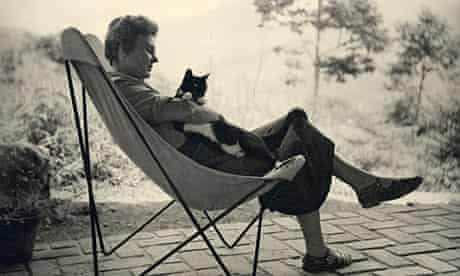
Louise Bogan

bogan.jpeg


A Letter

 I came here, being stricken, stumbling out
At last from streets; the sun, decreasing, took me
For days, the time being the last of autumn,
The thickets not yet stark, but quivering
With tiny colors, like some brush strokes in
The manner of the pointillists; small yellows
Dart shaped, little reds in different pattern,
Clicks and notches of color on threaded bushes,
A cracked and fluent heaven, and a brown earth.
I had these, and my food and sleep—enough.
 
This is a countryside of roofless houses,—
Taverns to rain,—doorsteps of millstones, lintels
Leaning and delicate, foundations sprung to lilacs.
Orchards where boughs like roots strike into the sky.
Here I could well devise the journey to nothing,
At night getting down from the wagon by the black barns,
The zenith a point of darkness, breaking to bits,
Showering motionless stars over the houses.
Scenes relentless—the black and white grooves of a woodcut.
 
But why the journey to nothing or any desire?
Why the heart taken by even senseless adventure,
The goal a coffer of dust?    Give my mouth to the air,
Let arrogant pain lick my flesh with a tongue
Rough as a cat’s; remember the smell of cold mornings,
The dried beauty of women, the exquisite skin
Under the chins of young girls, young men’s rough beards,—
The cringing promise of this one, that one’s apology
For the knife struck down to the bone, gladioli in sick rooms,
Asters and dahlias, flowers like ruches, rosettes. . .
 
Forever enough to part grass over the stones
By some brook or well, the lovely seed-shedding stalks;
To hear in the single wind diverse branches
Repeating their sounds to the sky—that sky like scaled mackerel,
Fleeing the fields—to be defended from silence,
To feel my body as arid, as safe as a twig
Broken away from whatever growth could snare it
Up to a spring, or hold it softly in summer
Or beat it under in snow.
 
                                                       I must get well.
Walk on strong legs, leap the hurdles of sense,  
Reason again, come back to my old patchwork logic,
Addition, subtraction, money, clothes, clocks,
Memories (freesias, smelling slightly of snow and of flesh
In a room with blue curtains) ambition, despair.
I must feel again who had given feeling over,
Challenge laughter, take tears, play the piano,
Form judgments, blame a crude world for disaster.
 
To escape is nothing.    Not to escape is nothing.
The farmer’s wife stands with a halo of darkness
Rounding her head.    Water drips in the kitchen
Tapping the sink.    To-day the maples have split
Limb from the trunk with the ice, a fresh wooden wound.
The vines are distorted with ice, ice burdens the breaking
Roofs I have told you of.

Saturday, February 5, 2022

John Cheever


Progetto senza titolo (5).png


lines from Falconer


pg. 38 "Loneliness taught the intransigent to love their cats as loneliness can change anything on earth."

pg. 51 Farragut, lying on his cot thinking of the morning and his possible death, thought that the dead, compared to the imprisoned, would have some advantages. The dead would at least have panoramic memories and regrets, while he, as a prisoner, found his memories of the shining world to be broken, intermittent and dependent on chance smells-grass, shoe leather, the odor of piped water in the showers. He possessed some memories, but they were eclipsed and indisposed. Waling in the morning, he cast wildly and desperately around for a word, a metaphor, a touch or smell that would grant him bearing...

pg. 80 "It was a very heavy and beautiful snow that, like some juxtaposition of gravity, seemed to set the mountain range free of the planet."

pg. 188 "I wouldn't be able to speak to you softly and with patience at this point if I did not believe that mathematics and geometry are a lying and a faulty analogy for the human disposition. When one finds in men's nature, as I do in yours, some convexity, it is a mistake to expect a corresponding concavity. Thiere is no such thing as an iscosceles man."

pg. 200 "...so I figure I must come into this life with the memries of some other life and so it stands taht I'll be going into something else and, you know what, Zeke, you know what, I can hadly wait to see what it's going to be like..."

pg. 207 "Had he raised his head, he would have seen a good deal of velocity and confusion as the clouds hurried past the face of a nearly full moon.."

pg. 208 "I got plenty of money. I been evicted because I'm a human being, that's why.


John Cheever


ART_susan-john-cheever_03232011.jpg 


lines from Falconer


pg. 38 "Loneliness taught the intransigent to love their cats as loneliness can change anything on earth."

pg. 51 Farragut, lying on his cot thinking of the morning and his possible death, thought that the dead, compared to the imprisoned, would have some advantages. The dead would at least have panoramic memories and regrets, while he, as a prisoner, found his memories of the shining world to be broken, intermittent and dependent on chance smells-grass, shoe leather, the odor of piped water in the showers. He possessed some memories, but they were eclipsed and indisposed. Waling in the morning, he cast wildly and desperately around for a word, a metaphor, a touch or smell that would grant him bearing...

pg. 80 "It was a very heavy and beautiful snow that, like some juxtaposition of gravity, seemed to set the mountain range free of the planet."

pg. 188 "I wouldn't be able to speak to you softly and with patience at this point if I did not believe that mathematics and geometry are a lying and a faulty analogy for the human disposition. When one finds in men's nature, as I do in yours, some convexity, it is a mistake to expect a corresponding concavity. Thiere is no such thing as an iscosceles man."

pg. 200 "...so I figure I must come into this life with the memries of some other life and so it stands taht I'll be going into something else and, you know what, Zeke, you know what, I can hadly wait to see what it's going to be like..."

pg. 207 "Had he raised his head, he would have seen a good deal of velocity and confusion as the clouds hurried past the face of a nearly full moon.."

pg. 208 "I got plenty of money. I been evicted because I'm a human being, that's why.

Sunday, January 30, 2022

George Oppen

A Spectre in Every Street: George Oppen and the Poetics of Communism

Duncan, Reznikoff, Oppen, Rakoski
The Forms of Love

Parked in the fields
All night
So many years ago,
We saw
A lake beside us
When the moon rose.
I remember

Leaving that ancient car
Together. I remember
Standing in the white grass
Beside it. We groped
Our way together
Downhill in the bright
Incredible light

Beginning to wonder
Whether it could be lake
Or fog We saw, our heads
Ringing under the stars we walked
To where it would have wet our feet
Had it been water

Thursday, January 27, 2022

Elizabeth Bishop


Elizabeth Bishop


Filling Station 

Oh, but it is dirty!
—this little filling station,
oil-soaked, oil-permeated
to a disturbing, over-all
black translucency.
Be careful with that match!
 
Father wears a dirty,
oil-soaked monkey suit
that cuts him under the arms,
and several quick and saucy
and greasy sons assist him
(it’s a family filling station),
all quite thoroughly dirty.
 
Do they live in the station?
It has a cement porch
behind the pumps, and on it
a set of crushed and grease-
impregnated wickerwork;
on the wicker sofa
a dirty dog, quite comfy.
 
Some comic books provide
the only note of color—
of certain color. They lie
upon a big dim doily
draping a taboret
(part of the set), beside
a big hirsute begonia.
 
Why the extraneous plant?
Why the taboret?
Why, oh why, the doily?
(Embroidered in daisy stitch
with marguerites, I think,
and heavy with gray crochet.)
 
Somebody embroidered the doily.
Somebody waters the plant,
or oils it, maybe. Somebody
arranges the rows of cans
so that they softly say:
esso—so—so—so
to high-strung automobiles.
Somebody loves us all.

Donald Justice


On The Death Of Friends In Childhood

  
We shall not ever meet them bearded in heaven 
Nor sunning themselves among the bald of hell; 
If anywhere, in the deserted schoolyard at twilight, 
forming a ring, perhaps, or joining hands 
In games whose very names we have forgotten. 
Come memory, let us seek them there in the shadows. 


Monday, January 24, 2022

Weldon Kees


Aspects of Robinson

Robinson at cards at the Algonquin; a thin 
Blue light comes down once more outside the blinds. 
Gray men in overcoats are ghosts blown past the door. 
The taxis streak the avenues with yellow, orange, and red. 
This is Grand Central, Mr. Robinson. 


Robinson on a roof above the Heights; the boats 
Mourn like the lost. Water is slate, far down. 
Through sounds of ice cubes dropped in glass, an osteopath, 
Dressed for the links, describes an old Intourist tour. 
—Here’s where old Gibbons jumped from, Robinson. 


Robinson walking in the Park, admiring the elephant. 
Robinson buying the Tribune, Robinson buying the Times. Robinson 
Saying, “Hello. Yes, this is Robinson. Sunday 
At five? I’d love to. Pretty well. And you?” 
Robinson alone at Longchamps, staring at the wall. 


Robinson afraid, drunk, sobbing Robinson 
In bed with a Mrs. Morse. Robinson at home; 
Decisions: Toynbee or luminol? Where the sun 
Shines, Robinson in flowered trunks, eyes toward 
The breakers. Where the night ends, Robinson in East Side bars. 


Robinson in Glen plaid jacket, Scotch-grain shoes, 
Black four-in-hand and oxford button-down, 
The jeweled and silent watch that winds itself, the brief- 
Case, covert topcoat, clothes for spring, all covering 
His sad and usual heart, dry as a winter leaf. 

Barbara Guest

  Santa Fe Trail I go separately The sweet knees of oxen have pressed a path for me ghosts with ingots have burned their bare hands it is th...