Showing posts with label arab-american. Show all posts

Saturday, February 12, 2022

Marwa Helal


WRITE THIS INSTEAD

you are thinking about the last white person you had to cut out of your life. the one who took a picture of dylann roof to the hairdresser “coz she wanted a look with ‘creeper vibes.’” you wonder if the hairdresser was a person of color and rage fills you. how clearly you see that murderer while the hairdresser... and you do what you always do when this happens in public, you disassociate switching to the fantasy of having a particular baldwin quote* printed on billions of small cards and dropping them via drone all over this country. you are fantasizing about how you are always fantasizing about this but the quote is always changing and the location is always changing then you are thinking on home and language and how in some ways they have come to mean the same thing. the train arrives, you get a seat. at the next stop a large white man finds the open space beside you and you resist the reflex to make yourself small, to make room for him. he shrinks into the allotted negative space and reveals a pack of index cards with your mother tongue scrawled on them. you remember god is a surrealist poet and has a funny way of revealing herself to those who will believe. but you wonder why this campy looking man has such an interest in your language. a slew of predictable acronyms rush to the forefront of your mind: CIA, FBI, NSA — based on his age, you dismiss the possibility of the foreign service exam. you are tempted to ask, “why such an interest in arabic?” then you notice a golden band on his ring finger. perhaps he is learning it for the love of a woman who loves this language as much as you do. this sole warm thought is fleeting, as he is: he stands directly in front of you as he prepares to exit the train. you scrutinize him. you sense he senses it. you want to make him uncomfortable. you want to know what he is going to do with your language. but you do not ask. you go home and write this instead.
*“Until the moment comes when we, the Americans, are able to accept the fact that my ancestors are both black and white, that on that continent we are trying to forge a new identity, that we need each other, that I am not a ward of America, I am not an object of missionary charity, I am one of the people who built the country — until this moment comes there is scarcely any hope for the American dream. If the people are denied participation in it, by their very presence they will wreck it.”
​-James Baldwin, “The American Dream and the American Negro,” March 7, 1965

GENERATION OF FEELING

these growing pains though
this good will hunting
we
fallen twigs
look like bones
waiting to be lit
 
i am trying to tell you something about how
rearranging words
rearranges the universe

Marwa Helal


POEM TO BE READ FROM RIGHT TO LEFT

language first my learned i
second
see see
for mistaken am i native
go i everywhere
*moon and sun to
ل letter the like
lamb like sound
fox like think but

recurring this of me reminds
chased being dream
circle a in
duck duck like
goose
no were there but
children other
of tired got i
number the counting
words english of
to takes it
in 1 capture
another

//

*شمسية و قمرية

"poem to be read from right to left” is written in a form created by the poet called The Arabic. 

The Arabic is a form that includes an Arabic letter with an Arabic footnote, and an Arabic numeral, preferably written right to left as the Arabic language is, and vehemently rejects you if you try to read it left to right. To vehemently reject, in this case, means to transfer the feeling of every time the poet has heard an English as Only Language speaker patronizingly utter in some variation the following phrase: "Oh, [so-and-so] is English as a Second Language..." As if it was a kind of weakness, nah.

Saturday, December 25, 2021

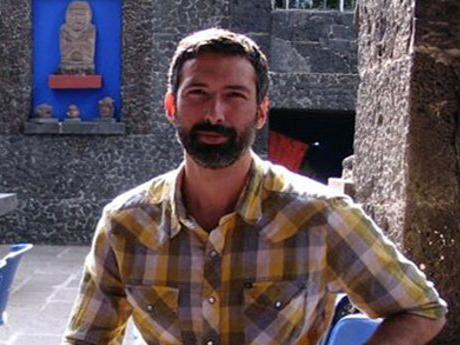
Farid Matuk


Glistering

            young
clairvoyant body           
           I’m sorry I’m loud
this long, this poorly            
           around you the masc
worship slide is steep
and never stops
           I aged trying
to be at both ends            
           9%
humidity, burnt
oranges still
           on their stems
scintillating wind
           barking boy
           without friends
sitting under Jupiter in the sky
           all I have is sentiment
well bound in me 
            but not
in you who reads
            the spent or rested words
who sits on the grain 
           sparkle I don’t know
I’m holding in the quiet space
           next to jadeite
(for abundance)
           I dreamt, my transparency
           that you sprayed my throat
in Clorox from within
           a real friend
knows to stay well enough away
           a cover song
of love seen through
           to revolutionary intent
           my imitation
of my poem is my poem
the evil in us
           the actual absence of it
my young
clairvoyant body through the dry
           bright envelopment
already in the world
           gesturing sand
           in the air seen through
come ’round
           come rain
hand, here


Tuesday, December 21, 2021

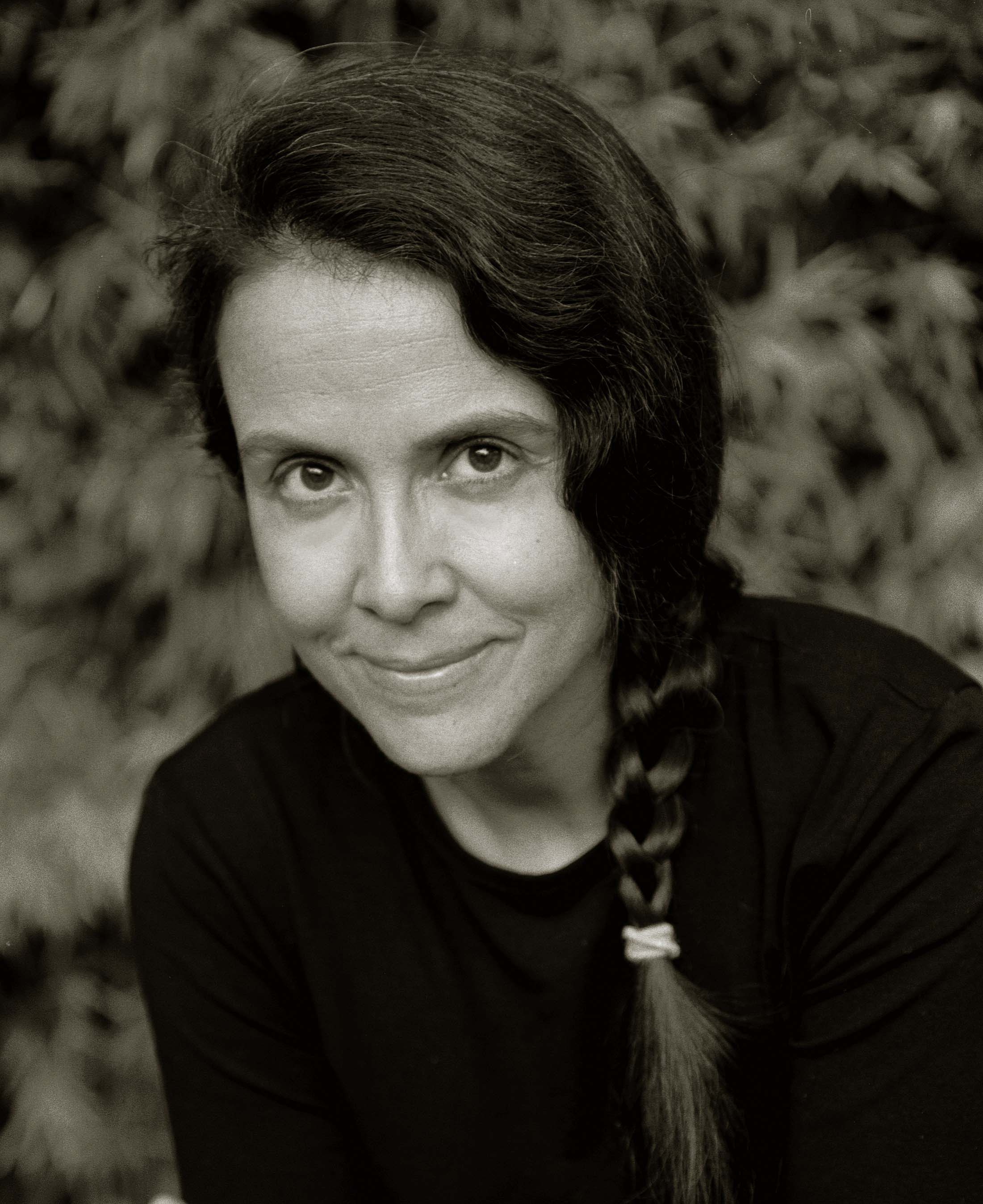
Naomi Shihab Nye


Politics, perception, and precious details: Q&A with poet Naomi Shihab Nye

The Young Poets of Winnipeg


scurried around a classroom papered with poems.

Even the ceiling, pink and orange quilts of phrase...

they introduced one another, perched on a tiny stage

to read their work, blessed their teacher who

encouraged them to stretch, wouldn’t let their parents

attend the reading because parents might criticize,

believed in the third and fourth eyes, the eyes in

the undersides of leaves, the polar bears a thousand miles north,

and sprouts of grass under the snow. They knew their poems

were glorious, that second-graders could write better

than third or fourth, because of what happened

on down the road, the measuring sticks

that came out of nowhere, poking and channeling

the view, the way fences broke up winter,

or driveways separated the smooth white sheets

birds wrote on with their feet.

Tuesday, December 14, 2021

Philip Metres


On I-65, south of Louisville,
our eyes locked on the totem KRISPY KREME
half lost in a forest of signs, we turned
off the main stream.  We’d heard the donut chain’s

disappearing.  Tucked in a corner,
behind faux-glass double doors, they lay
fluorescent.  We ransacked the last row.
On the road, nostalgia, sugar, sixties

tunes: hit the road, Jack,  Ray’s outrage, Martha
and the Vandallas nowhere to run,
nowhere to hide.  All afternoon, we picked
our way through Broncos and eighteen wheelers

with sticky hands.  At Hodgenville, Lincoln’s
birthplace, we rummaged through
chocolate Lincoln, key chain Lincoln,
Lincoln lunch boxes, his face on every wall

watching us.  Named after his grandfather,
Abraham, who was killed by an Indian
his father killed one moment later.
In the museum, a facsimile

of a letter.  How once, in Kentucky,
Lincoln witnessed a slave caravan
pass through town.  On hands and necks
a web of chains, iron collars chafing.

At that moment, he saw a family sundered
as easily, perhaps, as we imagine
him heft his fabled axe.  History
is part cartoon, part bloodied tongue:

Mary Todd’s madness, presidential
depression, the prurience of news
we abhor and buy.  What were the headlines—
why did Booth scream, “sic semper tyrannus”?

We pressed play, and Lincoln whirred to life,
1863, Gettysburg: “our fathers
brought forth a new nation, conceived
in liberty…all men created equal….”

What do we know of Lincoln’s mother
the family left, buried in Kentucky?
That she couldn’t read.  I once asked my mom
what she’d like remembered of her family.

“That’s nice, sweetheart,” was all she passed on.
In the car, we listened to ’68—
letter-tapes my dad sent home, holed up
in a Saigon hotel during Tet,

angular fear in his cool monotone.
As the tape wound down, he invoked his family’s
names—Mom, Dad, Richard, John, Lila baby,
as if they formed a mantra strong enough

to hold the VC off.  How easy to eject
the tape, ease out of our rental’s A/C
into Lincoln’s one-windowed shack,
cradled now in pillared limestone.

We walked inside, then quickly out again.
It seemed wrong to gawk at what had been
just a shell from the elements.  Outside, wind creaking
cedars.  Here, at Sinking Springs, Lincoln

dunked buckets for water.  Then they moved,
and moved again, and he to Springfield,
across the country, to Washington,
and finally to Ford Theater, now

a museum diorama where his head
slumps and Mary’s mouth gapes open
and open, actors even in the balcony.


Philip Metres


Aaron (After the Bombing)

My flesh has swallowed an entire dream of heaven:
I’ve got a dozen screws floating around my spine,

casings & shells, mortar & construction nails
holding nothing forever. For legs I wheel

this chair. My body’s locked in the pitying gaze
of strangers, family, in the moment he froze

our fates together. I recall trying to rise,
slipping as if on ice, unseeing my eyes,

my father’s voice screaming something—what was my name—
but I could see only his mouth moving, the pain

in his eyes. I could not feel a thing.  Every day
I try to stand again. Sometimes I’m filled with joy,

sometimes I want to die. Myself I devour.
For his wish to be remembered, I’m raked with fire.


Philip Metres

Philip Metres


Compline 


That we await a blessed hope, & that we will be struck
With great fear, like a baby taken into the night, that every boot,

Every improvised explosive, Talon & Hornet, Molotov 
& rubber-coated bullet, every unexploded cluster bomblet, 

Every Kevlar & suicide vest & unpiloted drone raining fire 
On wedding parties will be burned as fuel in the dark season. 

That we will learn the awful hunger of God, the nerve-fraying 
Cry of God, the curdy vomit of God, the soiled swaddle of God, 

The constant wakefulness of God, alongside the sweet scalp 
Of God, the contented murmur of God, the limb-twitched dream-

Reaching of God. We’re dizzy in every departure, limb-lost. 
We cannot sleep in the wake of God, & God will not sleep 

The infant dream for long. We lift the blinds, look out into ink
For light. My God, my God, open the spine binding our sight.


Philip Metres


Philip Metres


Song for Refugees

After Mohamad Zatari

Ooze, oud. Ease hearts whose eyes sink low.
Be hourglass in the pillaged O—.
Be wells none see. Unstoppered tears,
O oud, we gather in your bowl.

O ladle of ores, scoop ink here
now seeping from the foreigner,
be sighs, O oud, and cloven aches
in the dark of millions of ears.

Be gift for famished wails and wakes
to lacks and flares and tented stakes,
the lonely outer sounds of sleeves
eating wind and drowning faces.

The oud’s a lovely ark that leaks
with tales and bromides we can’t keep,
and miles of ghosts before their sleep.
And miles of ghosts beneath our sleep.


Maged Zaher


Love being a construction that carries its own fractures:
- My own assumptions about your mirror
- The illness I'm fending off
My poems are enumerations of things in order to prove that I exist:
- Oolong tea
- Assam tea
- A computer
My logic is flawed
Kissing you is out of the question
So I switch my favorite color
To match your lips


Nathalie Handal

Nathalie Handal. Photograph courtesy of Atiq Rahimi


            Les Éventails, Portraits of Passio


The shadows of birds fading on a fighter’s back

 
The undressing of words on an unstamped postcard
 
The wet swings in the distant park
 
The jealousy of raindrops on the umbrella of lovers
 
The laughter of a boy before a bird
 
The song of two flutes, two swords, two bracelets, two fingers
 
The stare of a wave before a pearl
 
The yearning between the legs of a farmer’s wife
 
The opening of doors             closing midday
 
The sudden howling of our muse—and
 
les éventails—disturbing the guest inside of us


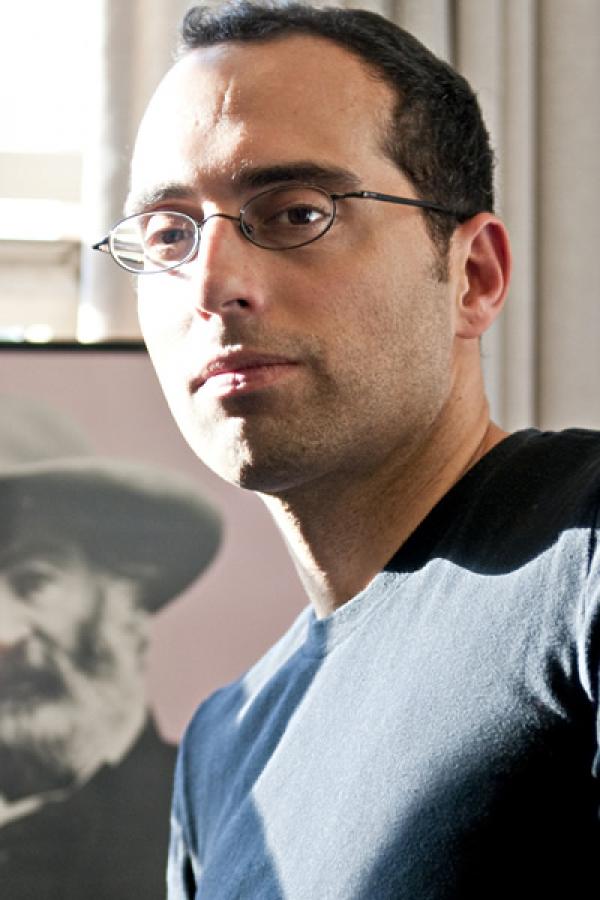
Khaled Mattawa


Image of Khaled Mattawa


HISTORY OF MY FACE

My lips came with a caravan of slaves
That belonged to the Grand Sanussi.
In Al-Jaghbub he freed them.
They still live in the poor section of Benghazi
Near the hospital where I was born.

They never meant to settle
In Tokara those Greeks
Whose eyebrows I wear
--then they smelled the wild sage
And declared my country their birthplace.

The Knights of St. John invaded Tripoli.
The residents of the city
Sought help from Istanbul. In 1531
The Turks brought along my nose.

My hair stretches back
To a concubine of Septimus Severus.
She made his breakfast,
Bore four of his sons.

Uqba took my city
In the name of God.
We sit by his grave
And I sing to you:
     Sweet lashes, arrow-sharp,
     Is that my face I see
     Reflected in your eyes?


Saturday, December 11, 2021

Farid Matuk


Farid Matuk by Geoffrey G.O'Brien


INTRODUCTION TO THE WORK OF FARID MATUK 
GEOFFREY G. O'BRIEN


Farid Matuk's This Isa Nice Neighborhood takes its idiosyncratically compounded title from a never-executed public art commission in San Francisco; the project would have arched that phrase in neon at the former site of a Filipino community and glowed parts of it simultaneously in Spanish and Chinese towards the Mission District and Chinatown. It's a canny choice for a poetry that seeks to occupy every available subject-position in relation to an event. Early in the book we encounter two consecutive poems titled "Talk" (there are many repeated titles across the collection) that describe the same melancholy self-interested exchange in Sicily between a North African teenager and a group of Italians, the first poem beginning "I am Moroccan today" and the second "I am Sicilian today." Like the simultaneously glowing phrases projected at neighborhoods, Matuk's I and today wander through perceiving centers and their inflections by class, race, and country, and don't do so to isolate some corporate human essence, but to track the interactions of different persons and the tragic and gratifying outcomes of those encounters, the "History As a War of Poses" as another early poem has it. That wandering through minds multiply foreign to each other has its counterpart in Matuk's extraordinary comfort with moving from subject to unobviously related subject as he moves between lines and stanzas. It's a poetry that softens the difference between non sequitur and entailment:

He wanted to lift the particular edges of their wishes to that dusty light

and witness the glint together, and wonder
and be so joined as he felt himself to be

with the wife slightly standing
and the reporter barely there.

And yet, there is nothing of this by the sea

                                ("Maybe Go to the Sea")

This empathic imagination that, beside the rolling sameness and difference of the waves, conjures the execution of a thief and his mourning wife half a world away, is typical of Matuk. He will not sacrifice the glory of the incessant ocean, the mutation's of sunset's internal differences, nor any affectionate, jaunty declarations of love for his partner Susan and their dog, but he will not pretend those avowals and their objects don't happen in a world that has also permitted countless lynchings and fatal border-crossings and hate speech—all those waves too are part of an ongoing singable tally. The book ends with a series of "Tallying Song[s]," a phrase borrowed from Whitman's "When Lilacs Last in the Door-Yard Bloom'd," and like Whitman, that earlier poet of ecstatic and solemn inventories of difference, Matuk seeks to "accommodate the earth" in all its social and phenomenal variety, opportunity, and damage. It's why a poem about Richard Pryor and race relations can end "Birds in song / spit gold ropes"—the poet's gaze can make "thin relation" of anything because "everything / happens beneath the cover /of something else, something prettier / now there are Arab African boys everywhere" and even the words "is" and "a" can unite to form a new neighborhood.


Wednesday, December 8, 2021

Fady Joudah


Fady Joudah


Three days into this Palestinian uprising I realized I had not spoken with my parents. I was avoidant, concerned that they were reliving anguish in ways I can’t fully know, even if throughout my life I’d witnessed and continue to share numerous Palestinian tragedies alongside them. I did not grow up in a refugee camp nor did I experience war or occupation. My world was not cleansed out of me quite as theirs was. My world is not in perpetual unraveling and maiming as that of millions of Palestinians within historic Palestine (Gaza, the West Bank, Israel) and other places. My father was born in Isdud/Ashdod in 1934, a village then. In 1948 my mother was in her mother’s belly as the latter marched on foot to a refugee camp in Gaza. My parents’ childhood was torn. And they watched their parents die broken, expelled. The cycle repeats for an inordinate number of Palestinians, in the flesh.


Sunday, December 5, 2021

Fady Joudah


Mimesis

By Fady Joudah

My daughter
                        wouldn’t hurt a spider
That had nested
Between her bicycle handles
For two weeks
She waited
Until it left of its own accord


If you tear down the web I said
It will simply know
This isn’t a place to call home
And you’d get to go biking


She said that’s how others

Become refugees isn’t it?

Barbara Guest

  Santa Fe Trail I go separately The sweet knees of oxen have pressed a path for me ghosts with ingots have burned their bare hands it is th...